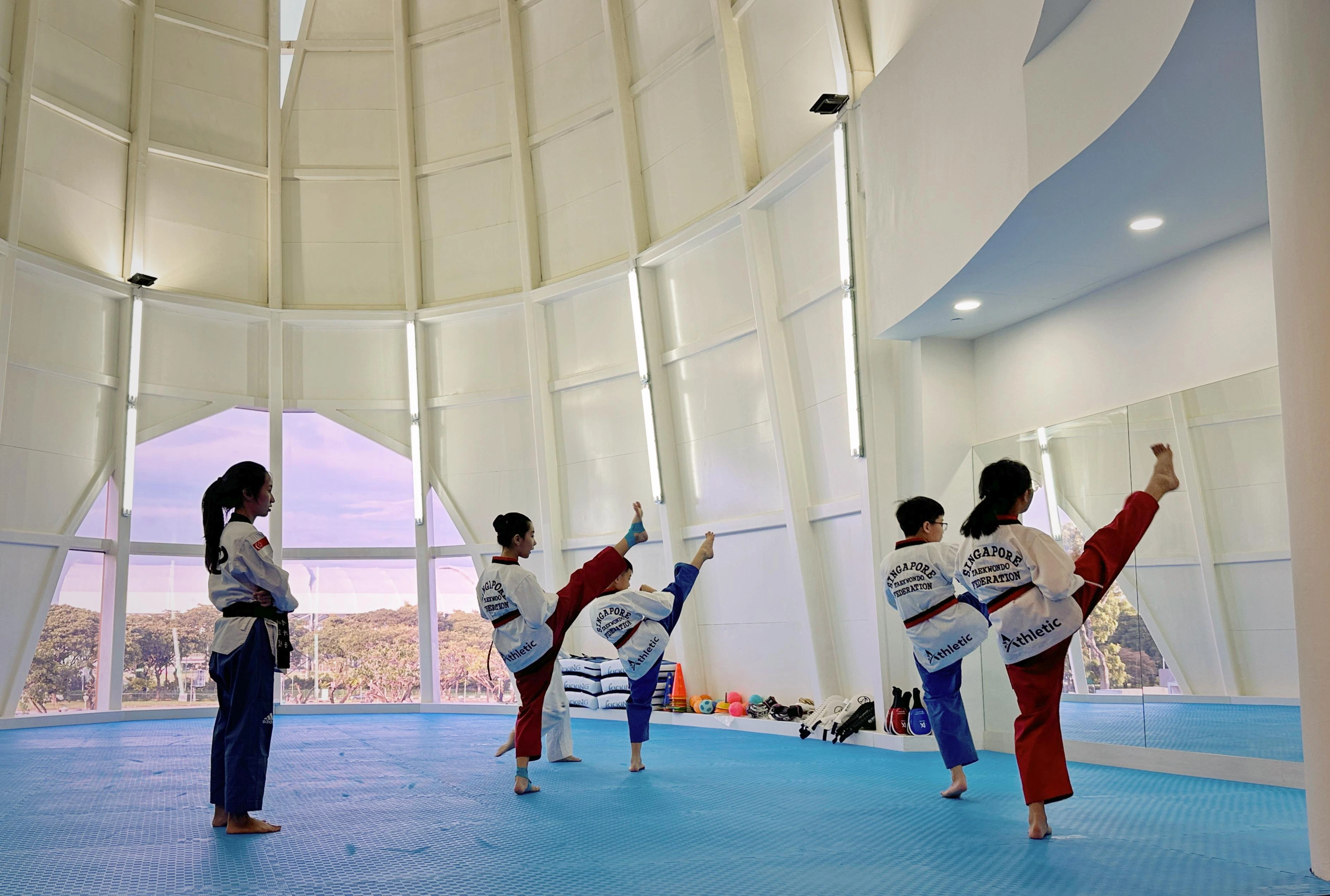
DSA Taekwondo in Singapore: The Parent's Guide
What Direct School Admission involves when your child's talent is taekwondo — the schools, the selection process, and how far ahead you need to start.
What Direct School Admission involves when your child's talent is taekwondo — the schools, the selection process, and how far ahead you need to start.
Direct School Admission (DSA-Sec) lets Primary 6 students apply to a secondary school on the strength of a talent, before they sit the PSLE. Taekwondo is one of the sports talents a number of Singapore secondary schools accept.
This guide answers the practical questions using MOE's own rules — starting with the point most often misunderstood: a DSA offer does not replace the PSLE. Jump straight to what you need:
Or pick a section below — no need to read the whole guide.
DSA-Sec gives students a route into a secondary school based on their interests, aptitude and potential, beyond their PSLE performance. It is also where sport carries the most weight: in the 2026 exercise, about 4 in 10 DSA-Sec applications were for sports and games — the largest share of any domain, ahead of STEM and performing arts at 2 in 10 each. MOE accepts a broad range of talents, including sports and games, the arts, debate, science and mathematics, languages and humanities, uniformed groups and leadership.
Taekwondo sits within sports and games. Schools that run a strong taekwondo CCA use DSA to recruit students who will strengthen that team, which is why the schools offering it tend to be the ones with an established competitive programme.
Two points from MOE's guidance shape the whole decision:
The trade-off is commitment. A child admitted through DSA-Sec cannot submit school choices during S1 Posting, and cannot transfer to another secondary school after the PSLE results are released.
The exercise follows the same shape each year. Individual schools run their own trials on their own schedules — MOE sets the outer deadlines, not the trial dates.
| When | Stage | What Happens |
|---|---|---|
| January to April | Explore school choices | Schools publish their talent areas and selection details. Most school websites are updated by late April. |
| Early May to early June | Apply | Applications open and close through the DSA-Sec Portal. This window is short — roughly four weeks. |
| June to late August | Trials and interviews | Shortlisted students attend school-run trials, auditions or interviews. Outcomes come directly from the schools. |
| Late October | Select preferred schools | Students with offers rank up to three schools in order of preference through the portal. |
| Late November | Allocation results | School allocation is released together with the PSLE results. |
MOE publishes the exact dates for each year's exercise on its DSA-Sec page. Confirm the current year's deadlines there before planning around them — the application window in particular is easy to miss.
Taekwondo is a relatively small DSA talent area — a handful of schools offer it, not dozens. These schools have listed taekwondo as a DSA talent area in recent exercises:
| School | Open To |
|---|---|
| Edgefield Secondary School | Boys and girls |
| Maris Stella High School | Boys |
| Mayflower Secondary School | Boys and girls |
| Pei Hwa Secondary School | Boys and girls |
| Springfield Secondary School | Boys and girls |
| St Anthony's Canossian Secondary School | Girls |
| St. Joseph's Institution (Secondary) | Boys |
| Temasek Junior College (Secondary) | Boys and girls |
Two things often trip parents up. First, Singapore Sports School and the School of the Arts are not DSA-Sec portal applications — MOE states that interested students should apply directly to the school. You will sometimes see Singapore Sports School listed among DSA taekwondo schools, but the route is different. Second, talent areas are refreshed every year: a school that accepted taekwondo last year may not offer it this year.
Because schools revise their talent offerings annually, always confirm on the school's own DSA page and through MOE SchoolFinder before applying. Several schools publish their talent list as an image or PDF that is replaced each year, so a page you bookmarked last cycle may no longer reflect what is on offer.
Not sure whether your child is on track for a taekwondo DSA application?
Ask About DSA Preparation
Processes differ between schools, but a sports DSA trial generally has three components.
Technical demonstration. Your child performs set poomsae and kicking techniques on request. Assessors look for clean stances, correct chambering, balance and control — not simply power or flexibility.
Physical assessment. Agility drills, speed and flexibility testing, the same measures used across sports DSA talent areas. These are trainable.
Interview. A short conversation about commitment, training history and why your child wants that school's programme. Schools are recruiting someone who will still be training in Secondary 4, so attitude counts as much as skill.
A sports DSA application rests on evidence. These carry the most weight, roughly in order:
Note what is not on that list: a black belt is not a prerequisite. Schools are recruiting potential they can develop over four years, not a finished athlete.
Working backwards from the P6 application year:
The pattern behind all of it: consistency beats intensity. A child training steadily from P3 will almost always present better than one who trains hard for eight months before the deadline. If your child is younger and you are still deciding, our kids taekwondo classes in Singapore page covers training by age group from age 3 upwards.
This is the single most important thing to understand before committing to a DSA pathway, and it is frequently glossed over.
MOE is explicit: a student offered a place through DSA-Sec still needs a PSLE score that qualifies them for the Posting Group offered by that school. If a school offers a place under Posting Group 3, the student needs a PSLE score within that range to take it up. A DSA place is conditional — training and academic preparation run in parallel, and both have to hold.
Weigh the commitment honestly with your child too. Accepting a DSA place removes the S1 Posting choice entirely and rules out transferring after the results. It is a real commitment to one school and one programme, made almost a year before results day.
Sourced from MOE's DSA-Sec eligibility guidance.
DSA preparation draws on both halves of competitive taekwondo — poomsae for the technical demonstration, kyorugi for the sparring some schools include.
Founder & Principal
Kukkiwon certified, with over 10 years of professional teaching experience across WT and Traditional Taekwondo. Master Wayne oversees each student's grading pathway — the documented belt progression that sits at the centre of a DSA portfolio.
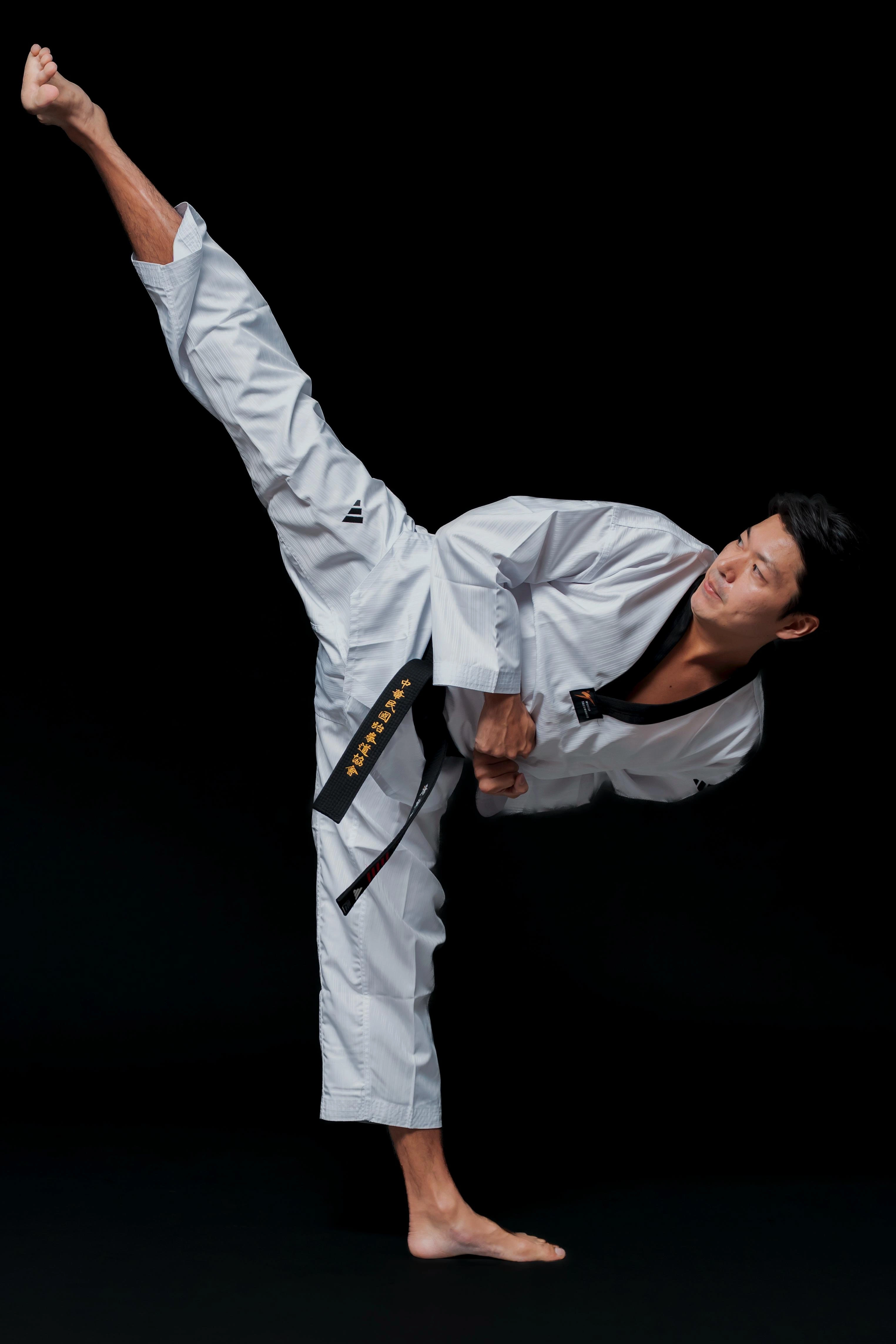
Senior Instructor & Kyorugi Competition Instructor
A Kukkiwon 5th Dan and renowned sparring expert, Master Yu helps students refine speed, accuracy and tactical skills — the sparring side of selection, and the foundation for competing at school level afterwards.
We are a Singapore Taekwondo Federation registered school, and our DSA preparation rests on three things:
If you are weighing up whether a DSA pathway is realistic, the most useful first step is a conversation about where your child is now and what the timeline looks like from here. We would rather give you an honest read than an encouraging one.
Worth knowing either way: the benefits of taekwondo for focus, discipline and confidence are well documented, and they apply whether or not your child ever applies for Direct School Admission.
Yes. Taekwondo is accepted as a sports talent under DSA-Sec by a number of Singapore secondary schools. It is a relatively small talent area, so shortlisting should start from which schools accept taekwondo rather than from school rankings.
Schools that have listed taekwondo as a DSA talent area in recent exercises include Edgefield Secondary, Maris Stella High, Mayflower Secondary, Pei Hwa Secondary, Springfield Secondary, St Anthony's Canossian Secondary, St. Joseph's Institution (Secondary) and Temasek Junior College (Secondary). Talent areas are revised annually, so confirm on the school's own DSA page and through MOE SchoolFinder before applying.
No. A black belt is not a prerequisite. Schools assess belt rank alongside progression pace, competition record, consistency of training and trial performance. MOE also states that applicants without prior experience may apply, with schools assessing potential. A credible belt rank with dated progression still strengthens an application considerably.
Applications typically open in early May and close in early June, with school trials running through to late August, preferences submitted in late October, and allocation released with the PSLE results in late November. MOE publishes the exact dates for each year's exercise on its DSA-Sec page.
No, and this is the most common misunderstanding. A student offered a DSA-Sec place still needs a PSLE score that qualifies them for the Posting Group offered by that school. The place is conditional on meeting that requirement, so academic preparation continues in parallel with training.
Selection typically combines a technical demonstration (set poomsae and kicking techniques, assessed on stance, balance and control), a physical assessment (agility, speed and flexibility), and a short interview about commitment and training history. Each school runs its own process, so check the school's DSA page for specifics.
Starting between P1 and P3 is the most comfortable position, allowing belt progression and competition experience to build without pressure. P4 is still very workable. P5 is tight but not futile, with more weight falling on trial performance. Starting in P6 is realistically too late for that application cycle.
Not through the DSA-Sec Portal. MOE states that students interested in Singapore Sports School and the School of the Arts should apply directly to the school. You will sometimes see Singapore Sports School listed among DSA taekwondo schools, but the application route is different.
No. A student admitted through DSA-Sec cannot submit school choices during S1 Posting and cannot transfer to another secondary school after the PSLE results are released. They are expected to commit to the school and programme for its duration, which for a sports talent generally means representing the school.
It depends on the school. Most technical demonstrations centre on poomsae, since it is the clearest way to assess stance, precision and control in a short trial. Some schools also include sparring drills. Checking which a school emphasises before applying is one of the more useful preparations you can make.
Whether DSA is two years away or you are simply weighing up the option, an honest assessment of your child's current level and a realistic timeline is the best place to start. Book a free trial class and speak with our instructors about the pathway.