
Taekwondo for Children With ADHD or Autism
What the research actually shows, what a taekwondo class will ask of your child, and how to find out whether it fits — without committing to anything.
Ask Us a Question
What the research actually shows, what a taekwondo class will ask of your child, and how to find out whether it fits — without committing to anything.
Ask Us a Question
Parents ask us this often, usually having read that martial arts are good for focus or for autistic children. Here is the honest version.
Taekwondo is not a therapy, and we are not clinicians. It is a sport with a particular structure — one that suits some children very well and others poorly. Which your child is has more to do with them than with the diagnosis.

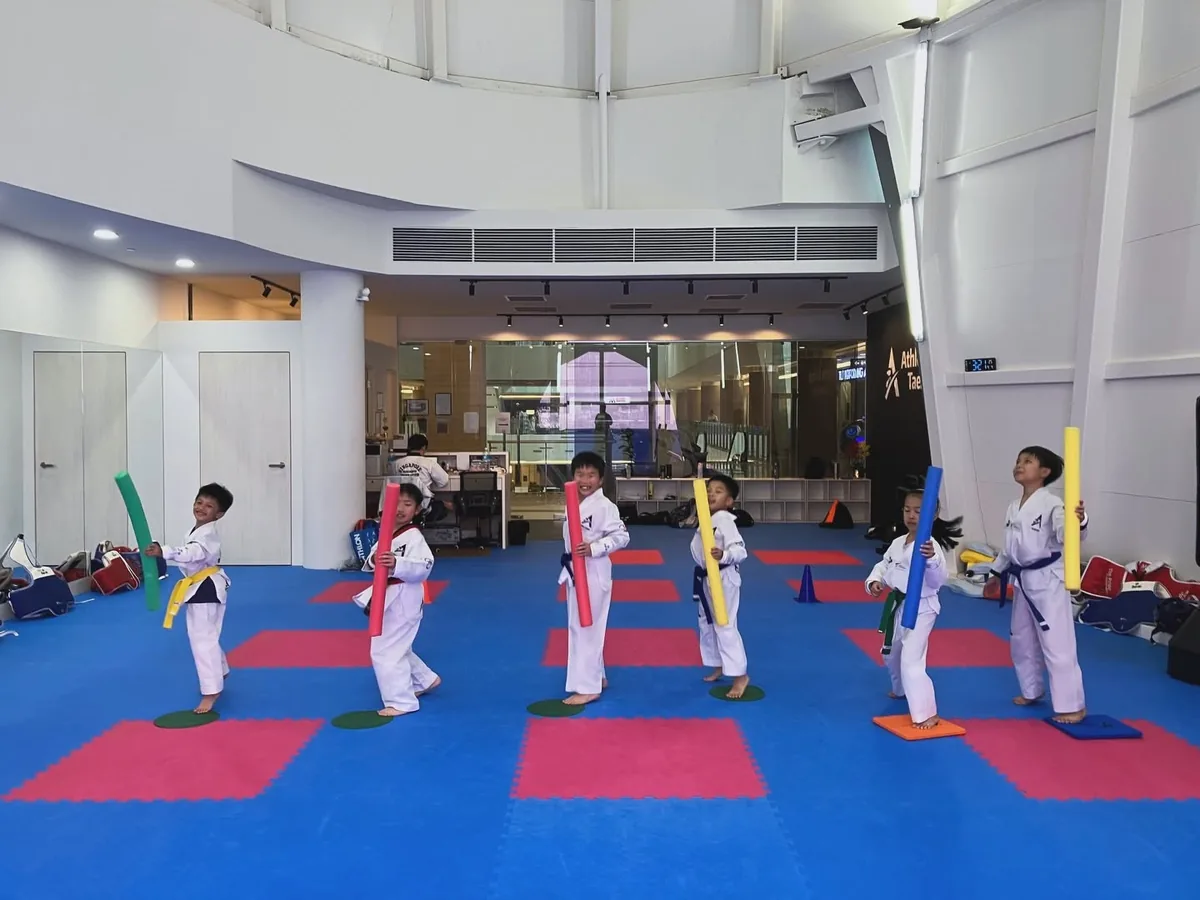
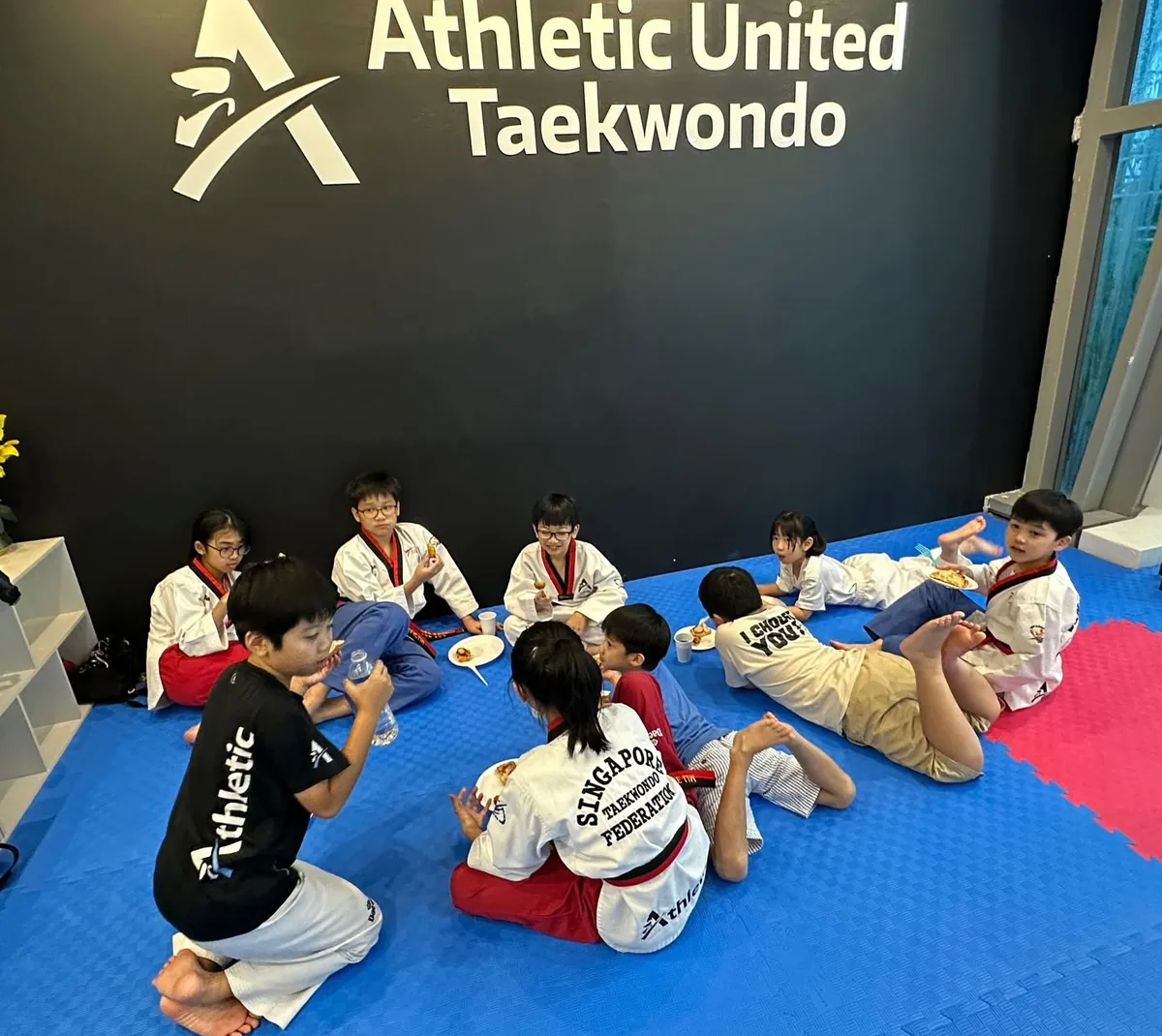
No booking, no pressure — just a conversation first.
The evidence is genuinely encouraging, but it comes mostly from small trials — and every serious review frames it the same way: a complement to standard treatment, not a replacement for it.
A 2023 meta-analysis published in PLOS ONE, pooling 24 trials and 914 children and adolescents with ADHD, found improvements across inhibitory control, working memory and cognitive flexibility. Notably, the type of skill mattered: open-skill activities like taekwondo, where you must read and react to a partner, outperformed closed-skill exercise such as running.
A randomised controlled trial of judo in children with ADHD found a measurable gain in working memory, which its authors suggested could complement medication. An 18-month controlled trial of taekwondo in adolescents with ADHD reported large gains in selective attention and inhibitory control.
A network meta-analysis of exercise interventions for autistic children found that martial arts significantly improved socially positive behaviours. Researchers link this to what a class is made of — imitation, modelling, immediate feedback, and explicit etiquette like bowing and partner drills.
A 24-week trial in Frontiers in Psychology found that structured martial arts games produced gains in language, social communication, sensory processing and gross motor function against standard rehabilitation.
How to read all of this. The direction of the evidence is positive and the mechanism is plausible — structured, partner-based, high-feedback training appears to do more than simple exercise. But the trials are small, reviewers rate the overall certainty of the evidence as limited, and nobody should present taekwondo as a treatment. It sits alongside therapy, school support and medical advice, never in place of them.
Separate from the research, these are practical features of how a class is organised — observations, not clinical claims.
Better known before the first lesson than discovered during one.
Shouting (kihap), pads being struck, a hall that echoes. For a sound-sensitive child, the most common sticking point.
Barefoot on mats, and the dobok is stiff fabric belted at the waist. Both are sensory experiences some children dislike at first.
Some drills run in lines. We keep the waits short, but waiting near other children is still a real demand.
Partner work and eventually sparring. This comes much later, never in the first lessons, and is not compulsory to keep training.
None is a reason not to try — they are what to watch for in a trial, and what to tell us in advance.
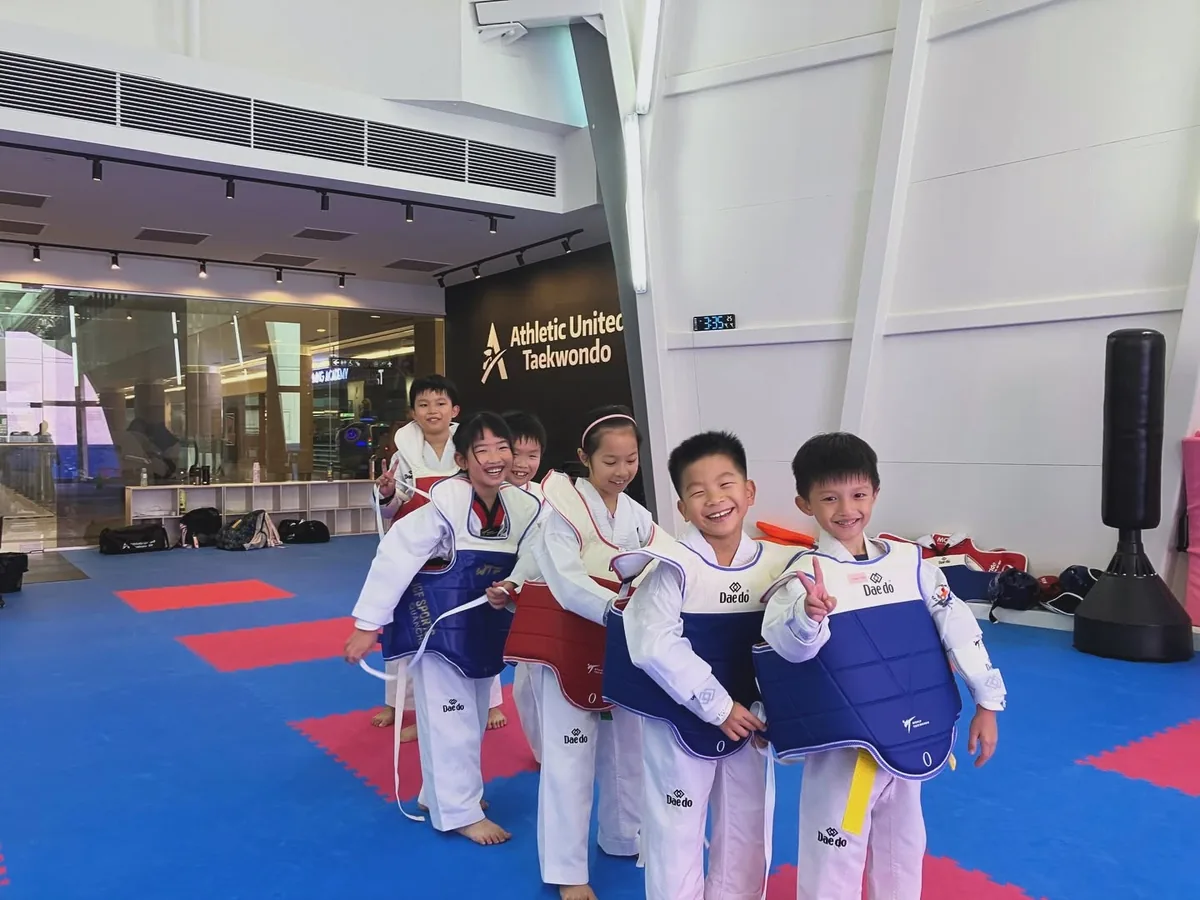
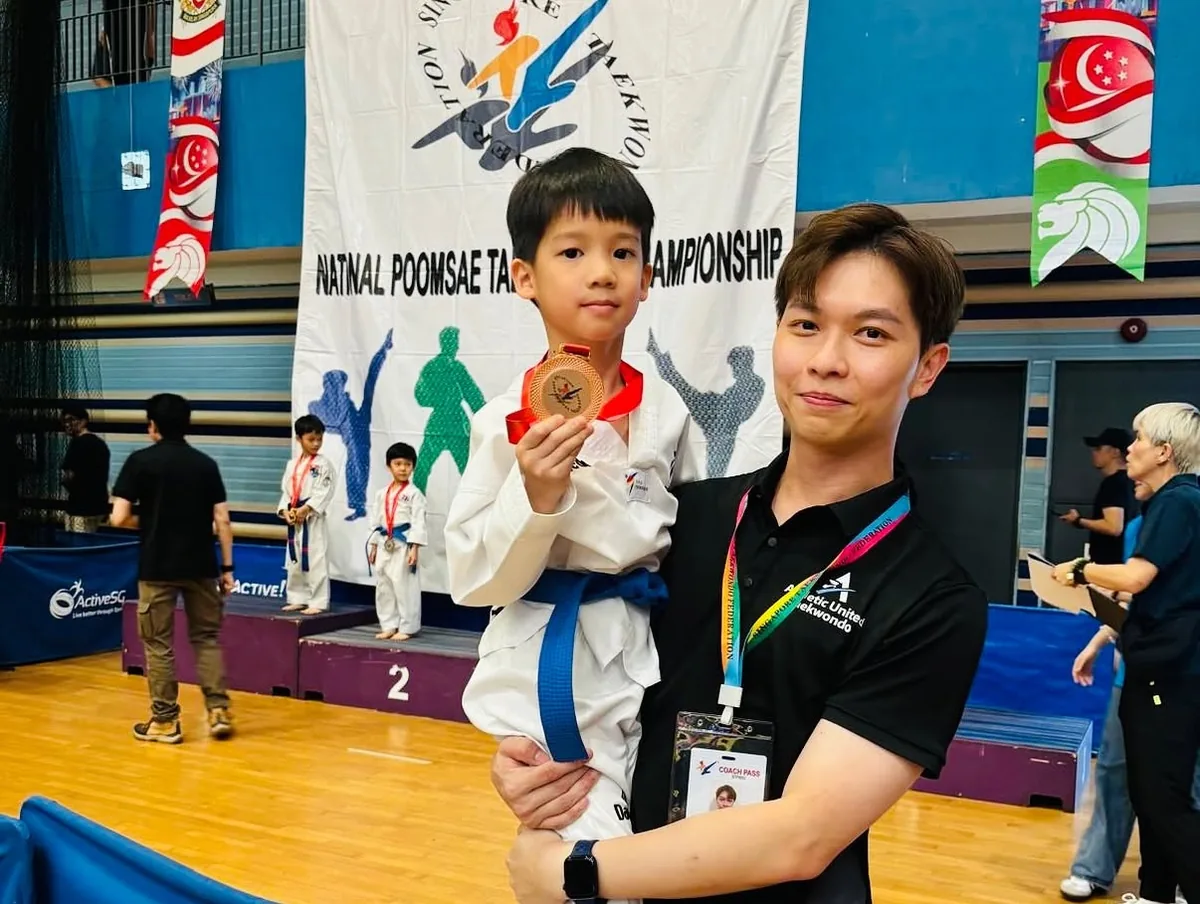
We are a taekwondo school, not a special-needs provider. What we can offer is flexibility about how a child starts.
And if we think another activity would serve your child better, we will say so.
We would be cautious of any school that answers this with a straight yes, including ours. The trials in this area are small, and none of them compares martial arts against each other in children with ADHD or autism. What the evidence points to is more general: structure, repetition and clear expectations help, and that describes traditional martial arts as a category rather than taekwondo specifically.
So the honest comparison is about practicalities, not superiority. Karate is close enough to taekwondo that the choice usually comes down to the instructor rather than the art — though karate's lower stances mean more holding of a position, where taekwondo keeps children moving. Brazilian jiu-jitsu differs more sharply: it involves sustained close physical contact, which some children find genuinely grounding and others cannot tolerate at all. If your child is contact-averse, that single factor will settle the question faster than anything else here.
What taekwondo offers is a class that runs the same way every week, in a predictable order, with short drills and immediate feedback. That suits a lot of children on the autism spectrum and a lot of children with ADHD. It does not suit all of them, and a child who needs a quiet, low-stimulation room may struggle with a hall of thirty people counting out loud.
The useful test is not which art ranks highest but how a specific instructor handles the child who is not paying attention. Visit two or three, watch that moment, and choose on what you see.
The evidence is encouraging. A meta-analysis of physical activity in ADHD found gains in inhibitory control, working memory and cognitive flexibility, and open-skill activities like taekwondo — where you read and react to a partner — outperformed closed-skill exercise such as running. A judo trial in children with ADHD found a working-memory gain its authors framed as complementing medication. Trials remain small, so treat it as a useful addition alongside existing support, not a replacement for it.
A network meta-analysis of exercise programmes for autistic children found martial arts significantly improved socially positive behaviours, and a 24-week trial of structured martial arts games reported gains in language, social communication, sensory processing and gross motor function. Researchers credit the imitation, modelling, feedback and explicit etiquette built into a class. Whether it suits your particular child still depends heavily on sensory tolerance and the class environment.
No. It is a sport. It is not a substitute for therapy, medication, school support or clinical advice, and we would be wary of any school that implies otherwise. Treat it as a physical activity your child may enjoy and benefit from, alongside whatever else is in place.
We group by age and size rather than by belt alone, and we would discuss placement with you first. Where a group start is not right yet, a few 1:1 sessions are usually the better route in.
Then they stop and we talk about it. The trial is free precisely so that the first lesson can be a test rather than a commitment. Some children come back a few months later and manage it easily.
Our instructors are taekwondo instructors, not special-needs specialists. What we can offer is a conversation beforehand, flexibility about how your child starts, and honesty about whether we think we can do right by them.
It is the most common worry parents raise, and the evidence does not support it — studies of structured martial arts training point towards better focus and fewer behavioural problems rather than more. The reason is in how a class is run: almost everything a child does is on command, including stopping, and contact is controlled and supervised throughout. That said, these are small studies, and we are not clinicians. If aggression is a live concern for your child, raise it with us before you book.
Sometimes, though usually not in the way parents picture. The benefit is not having somewhere to hit things — it is being asked to stop on command, wait a turn and hold a position when you would rather not, week after week. That is the part that can transfer. It belongs alongside whatever support you already have in place, not instead of it, and we would not present taekwondo as a treatment for anything.
Tell us about your child — what they enjoy, what they find hard, what has worked elsewhere. We will give you a straight answer about whether taekwondo is worth trying, and what the first few weeks would look like.
Still not finding it? Ask us directly — we usually reply within the hour.