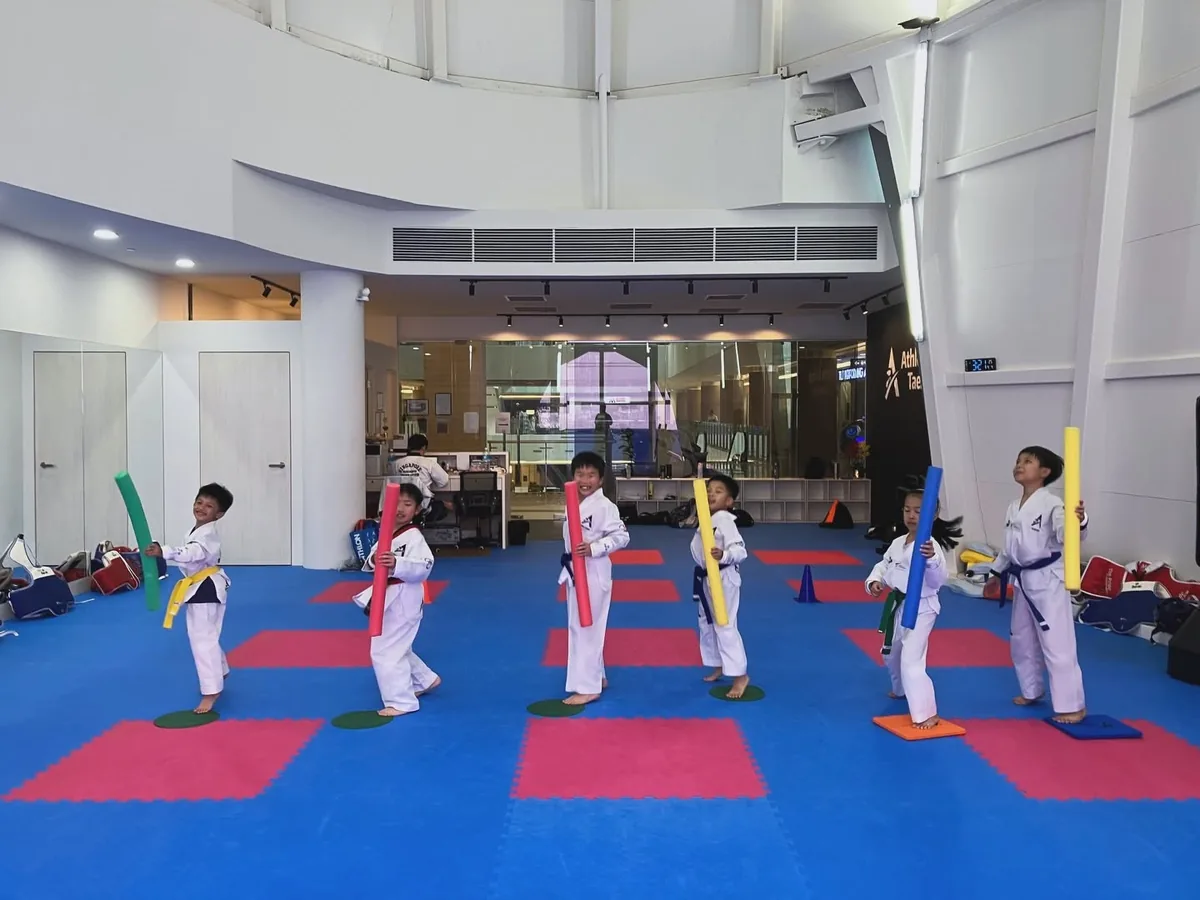
Taekwondo vs Judo for Kids: Which Should You Choose?
An honest comparison of taekwondo and judo for children in Singapore — two Olympic sports that train very different skills.
Book a Free Trial Class
An honest comparison of taekwondo and judo for children in Singapore — two Olympic sports that train very different skills.
Book a Free Trial Class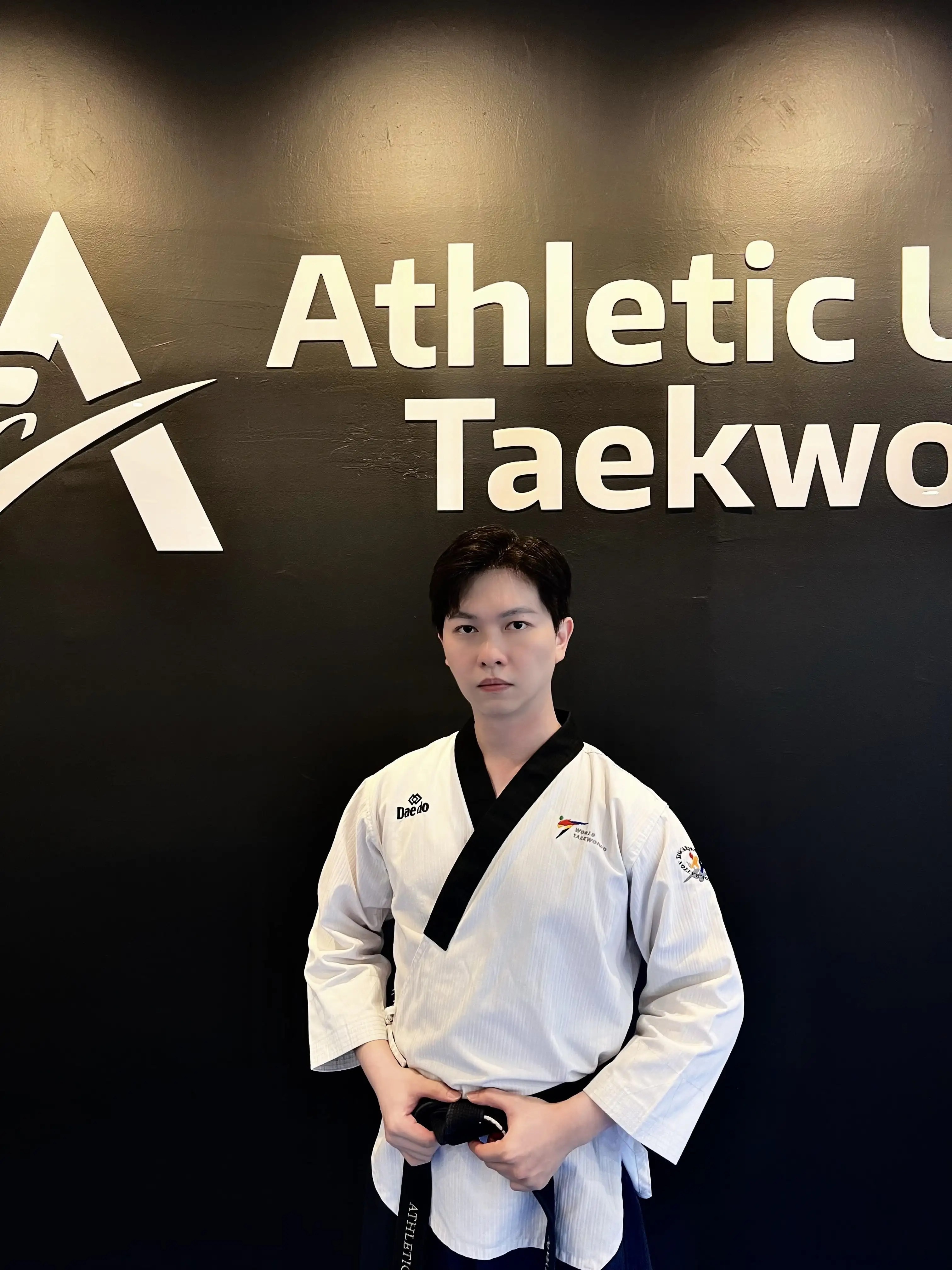
Taekwondo and judo are the two martial arts on the Olympic programme, and both have long, disciplined traditions behind them. But one is won by striking from a distance and the other by taking an opponent off their feet — so the class your child walks into looks nothing alike.
Here is what each one actually trains, and which children tend to thrive in each.

Or read on — the comparison table is just below.
Choose taekwondo if your child:
Choose judo if your child:
Both teach discipline, respect and self-control, both use coloured belts, and both reward years of patient practice — and children who train in martial arts have been found to show better focus, problem-solving and school results than those in team sports or no sport at all. The real question is whether your child would rather keep distance or close it.
The two arts side by side, as a parent would weigh them.
| Taekwondo | Judo | |
|---|---|---|
| Main focus | Kicking, footwork, forms, sparring | Throws, grips, balance, pins |
| How a point is scored | Landing a controlled strike | Throwing or pinning an opponent |
| Contact | At range, with protective gear | Constant, hands-on from the first lesson |
| Typical start age | 3–4 | 5–6 |
| Olympic sport | Yes, since Sydney 2000 | Yes, since Tokyo 1964 |
| Uniform | Lightweight dobok | Heavy judogi, built to be gripped |
| Non-contact competition | Yes — poomsae (forms) | Limited |
Taekwondo is built around the legs — fast, high, spinning kicks thrown from range. Judo is built around grips: breaking balance, then using an opponent's momentum to put them on the mat.
Judo's real gift to a child is ukemi — breakfalls. Learning to hit the ground safely is a life skill that carries into every other sport, and it is something taekwondo does not teach to the same depth.
Taekwondo students learn poomsae — set patterns that build memory, balance and precision, and can be competed without any sparring at all. Judo has kata, but it sits further from the centre of most children's training.
A dobok is light and loose so the legs move freely. A judogi is thick, stiff and reinforced at the collar and sleeves, because the whole sport is played through those grips.
On the Olympics. Judo entered the Games at Tokyo 1964 and taekwondo became a full medal sport at Sydney 2000. Unusually for this comparison, both arts offer a genuine international pathway — so if that matters to your family, it does not decide the question either way.
Parents often assume throwing is riskier than kicking. In practice how a school runs its classes matters far more than which art it teaches — and judo spends its early months teaching children precisely how not to get hurt.
What to look for when you visit, whichever art you choose:
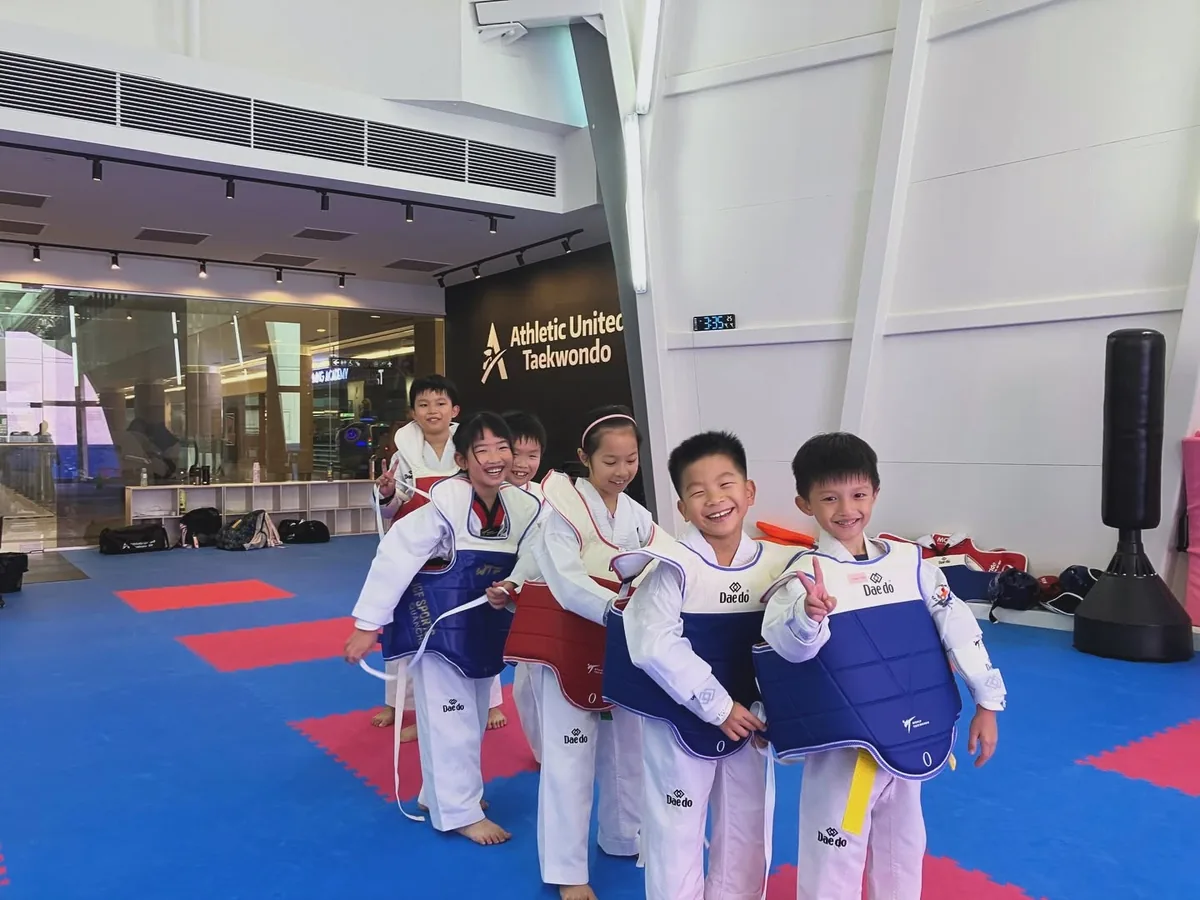

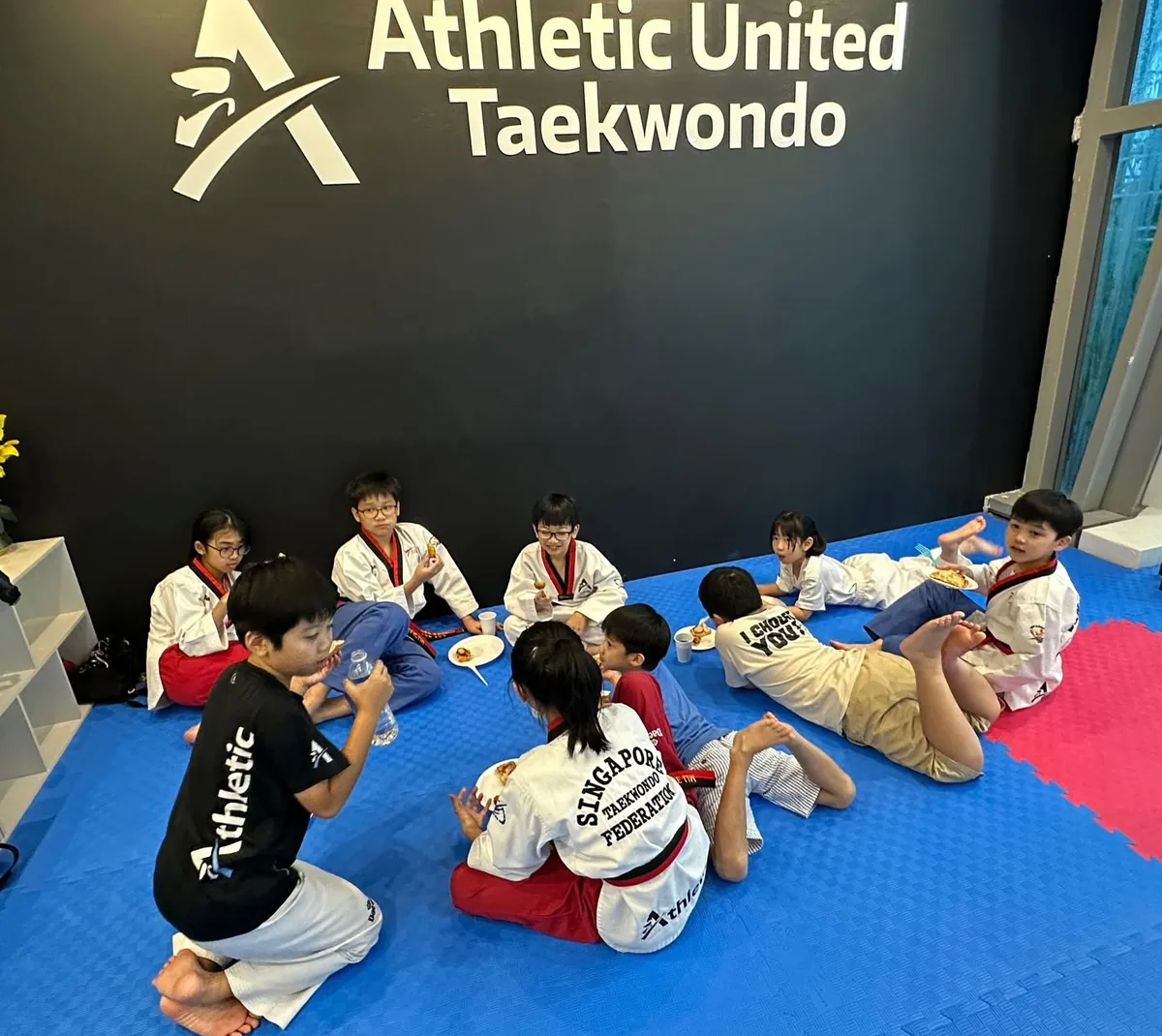
In our own Tots classes there is no contact whatsoever — three- to five-year-olds spend the lesson on coordination, listening and learning to follow a sequence. Contact arrives years later, with full protective gear, and only once a child has the control to use it.
Both are useful, and for different situations.
Reading space, holding it and moving out of reach — plus the awareness and composure to avoid trouble starting at all.
Staying upright when grabbed, controlling someone at close range, and landing safely when taken down — which protects a child in ordinary accidents too.
Where we would point you to judo: if your specific worry is a child being grabbed or wrestled to the ground, judo addresses that more directly than a striking art does.
For most primary-school children, though, the awareness, composure and body control that either art builds matter more day to day than any particular technique.
Judo is an excellent art with a long Olympic record. These are the practical reasons families in Singapore often land on taekwondo instead.
Taekwondo is one of the sports talents a number of Singapore secondary schools accept for Direct School Admission. See our guide to taekwondo and DSA.
Poomsae competition lets a child who dislikes contact still train seriously and compete. Judo has far less to offer a child who does not want to grapple.
Taekwondo ranks are certified to one worldwide standard, and the junior poom belt gives children a black-belt equivalent suited to their age.
We take children from age 3, with classes built around short attention spans. Most judo clubs will not start a child until 5 or 6.
Not sure if your child is ready? Come and find out — the trial is free.
Book My Child's Free TrialStill weighing up the options? Start with our guide to martial arts for kids in Singapore. Comparing something else? We have also written up taekwondo vs karate, jiu-jitsu and muay thai for kids.
If taekwondo is on your shortlist, our kids taekwondo classes page sets out what each age group does in class, and the class timetable shows when they run. And since the instructor matters more than the style, these are the three masters who would teach your child.
Founder & Principal
Over ten years of professional teaching experience in both WT (World Taekwondo) and Traditional Taekwondo, from first-timers to competitive athletes.
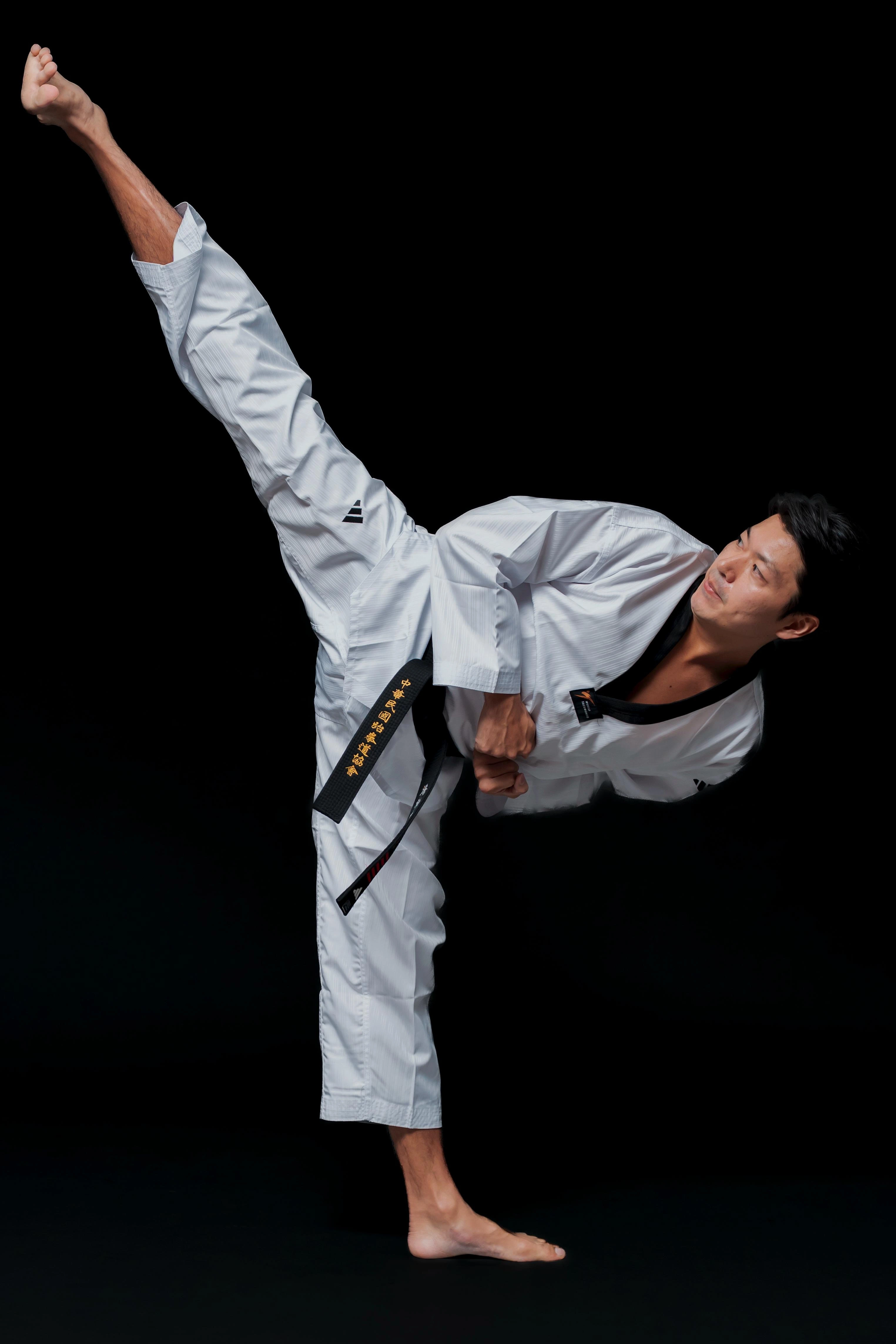
Senior Instructor & Kyorugi Competition Instructor
Kukkiwon 5th Dan, leading our sparring classes and guiding students who want to compete.

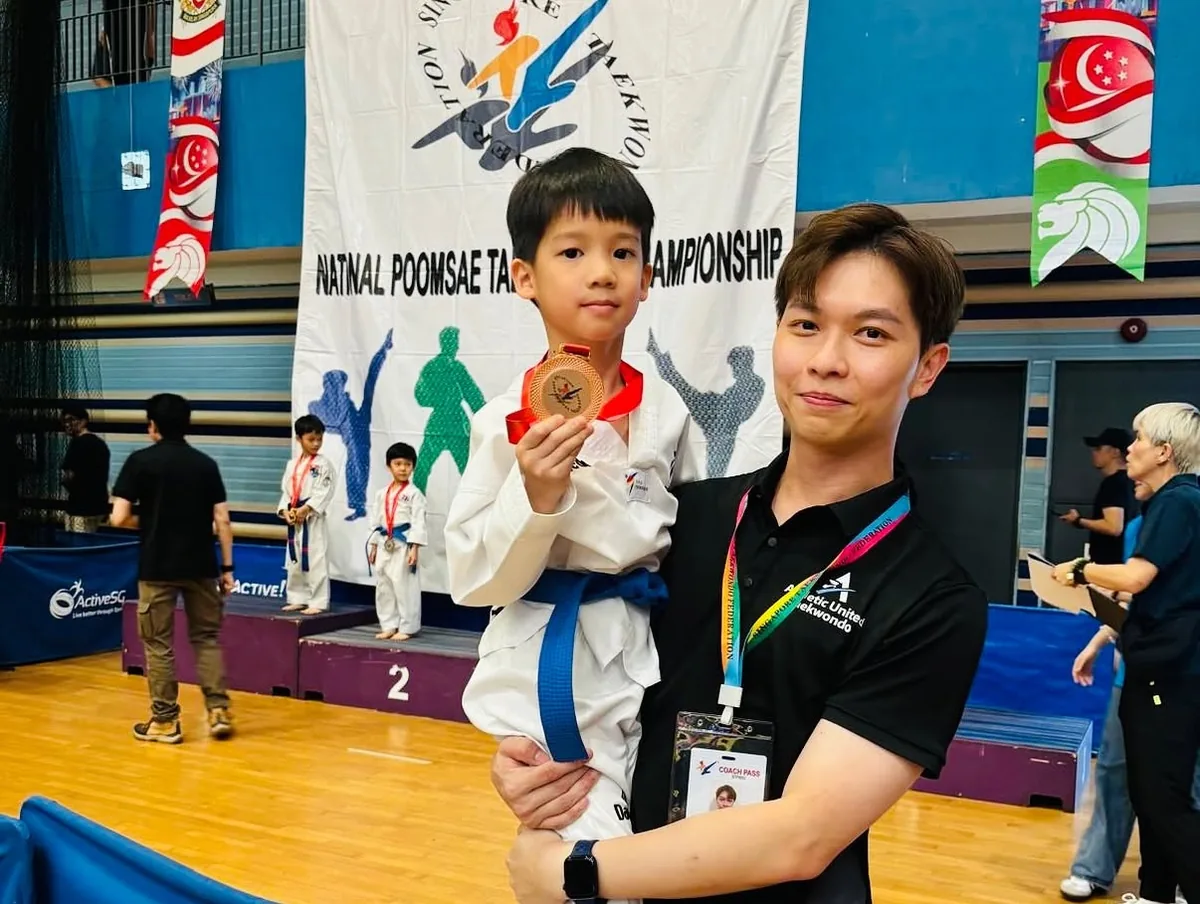
Poomsae Competition Instructor & SEA Games Gold Medallist
Former National Taekwondo Athlete, specialising in poomsae technique and helping students refine how they perform.
Taekwondo is a striking art: points come from controlled kicks and punches thrown at a distance. Judo is a grappling art: points come from throwing an opponent or pinning them. Taekwondo trains the legs and footwork; judo trains grips, balance and timing.
Neither is better in absolute terms. Taekwondo suits energetic children who like to move and can start as young as 3. Judo suits sturdy, physical children who are comfortable with constant close contact, and usually starts at 5 or 6.
Yes. Judo has been on the Olympic programme since Tokyo 1964, and taekwondo became a full medal sport at Sydney 2000. Both give a committed child a genuine national and international pathway.
They cover different situations. Taekwondo trains distance, timing and awareness; judo trains staying upright when grabbed, controlling someone close, and falling safely. If your worry is your child being wrestled to the ground, judo addresses that more directly.
Safety depends more on the school than the art. In a well-run class of either discipline, beginners build up gradually, children are grouped by age and size, and protection matches the art — sparring gear in taekwondo, deep mats and breakfall training in judo.
A dobok is lightweight and loose so the legs move freely for kicking. A judogi is thick, stiff and reinforced at the collar and sleeves, because judo is played through those grips. They are not interchangeable.
Eventually, yes — striking and grappling complement each other. We would not recommend it in the first year. Learning one art properly builds the discipline and body control that make the second easier later.
Not meaningfully. The setting — community course, private academy or 1:1 — affects price far more than the art does. Our kids classes start from $37.80 a lesson, and the full list is on our class fees page.
Taekwondo, generally — though not for the reason most people assume. Judo is not unsafe for a small child, and good judo coaching teaches leverage precisely so that size matters less. But judo is still decided by grips and throws, and a lighter child spends a lot of the early years being thrown by heavier ones. Taekwondo is scored on technique, speed and control, where a small, quick child is often at an advantage rather than a disadvantage. If your child is slight and easily discouraged, that difference tends to show up in how long they stick with it.
Reading about two martial arts only takes you so far. Book a free 30-minute trial, watch your child in a real kids taekwondo class, and judge from how they behave in it. No charge, and no obligation afterwards.
Still not finding it? Ask us directly — we usually reply within the hour.