
Taekwondo vs Jiu-Jitsu for Kids: Which Should You Choose?
An honest comparison of taekwondo and Brazilian jiu-jitsu (BJJ) for children in Singapore — what each one actually trains, and how to tell which suits your child.
Book a Free Trial Class
An honest comparison of taekwondo and Brazilian jiu-jitsu (BJJ) for children in Singapore — what each one actually trains, and how to tell which suits your child.
Book a Free Trial Class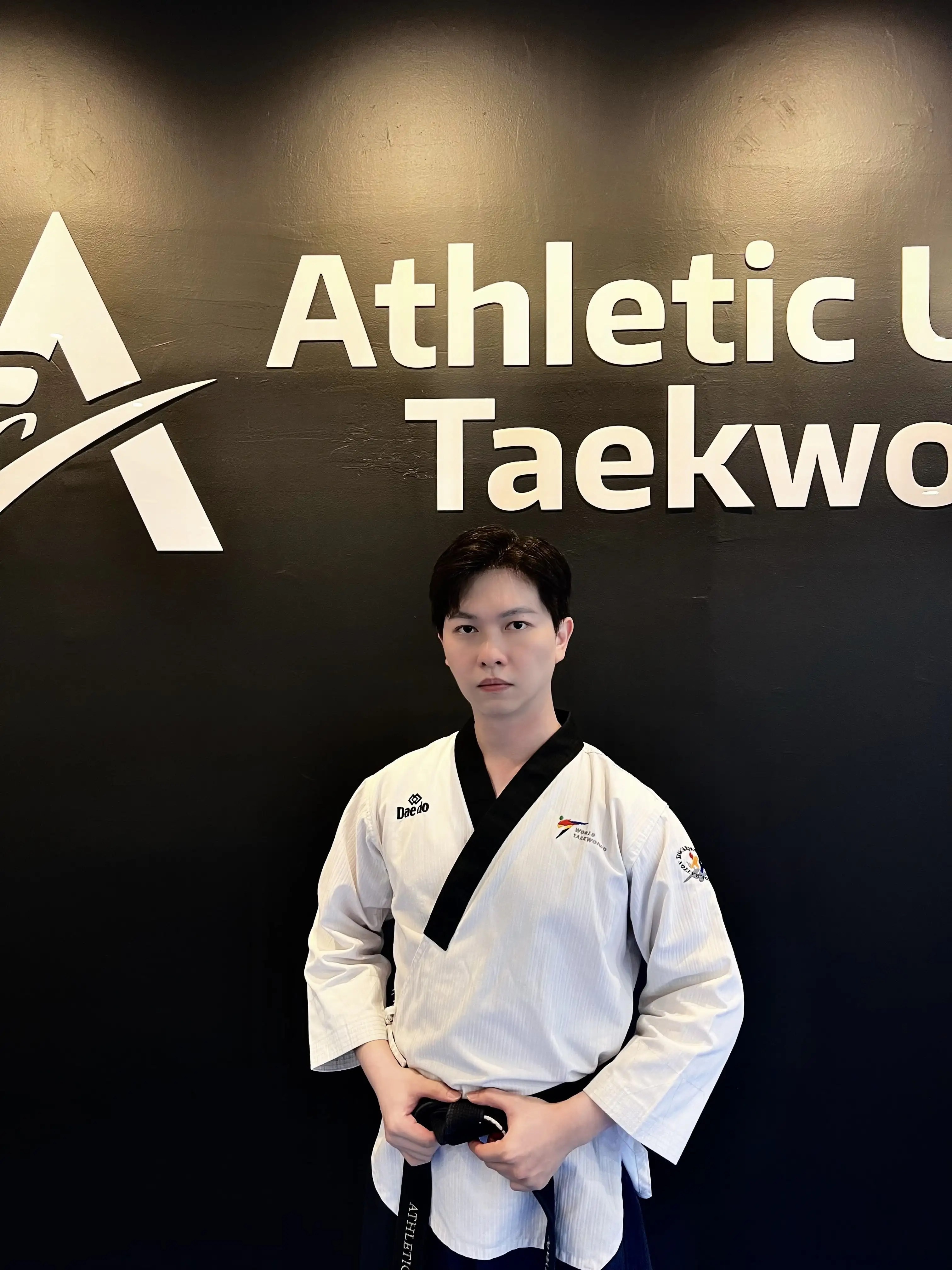
This is the sharpest fork in the road a parent faces. Taekwondo and jiu-jitsu are not two versions of the same thing — one is a striking art fought at a distance, the other is a grappling art fought on the ground. A child who loves one often has no interest in the other.
Here is what actually happens in each class, and which children tend to thrive in each.

Or read on — the comparison table is just below.
Choose taekwondo if your child:
Choose jiu-jitsu if your child:
Both build discipline, fitness and confidence, and both use coloured belts. The question is not which art is stronger — it is whether your child would rather keep an opponent at arm's length or close the distance.
The two arts side by side, as a parent would weigh them.
| Taekwondo | Brazilian jiu-jitsu | |
|---|---|---|
| Main focus | Kicking, footwork, forms, sparring | Ground control, positions, submissions |
| Where the action happens | Standing, at range | On the mat, in close contact |
| Striking | Central to the art | None |
| Typical start age | 3–4 | 5–6 |
| Olympic sport | Yes, since Sydney 2000 | No |
| Uniform | Lightweight dobok | Heavy gi, built to be gripped |
| Suits a child who… | Has energy to burn and likes to move | Is patient and enjoys close-quarters problem solving |
Taekwondo trains your child to control space — move in, strike, move out. Jiu-jitsu removes that space entirely and works from grips and body position.
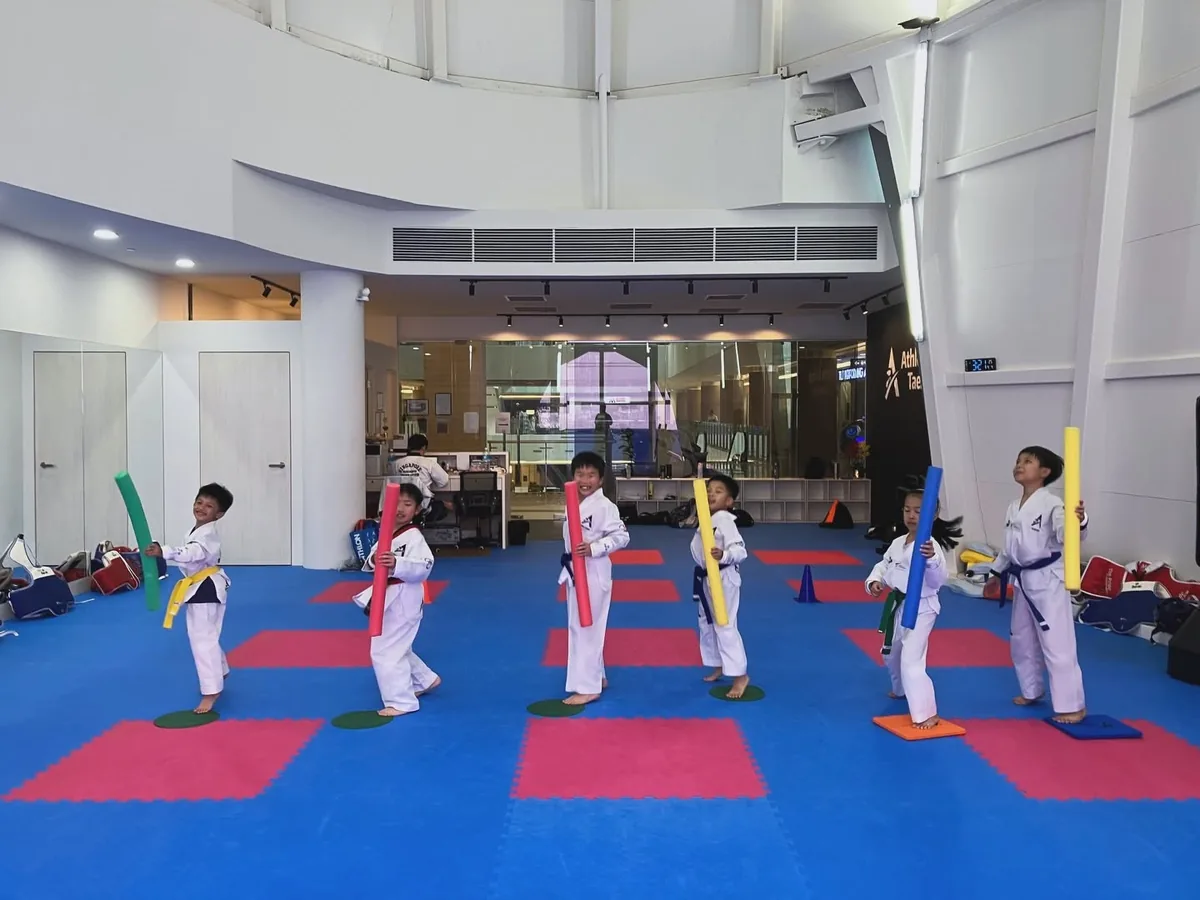
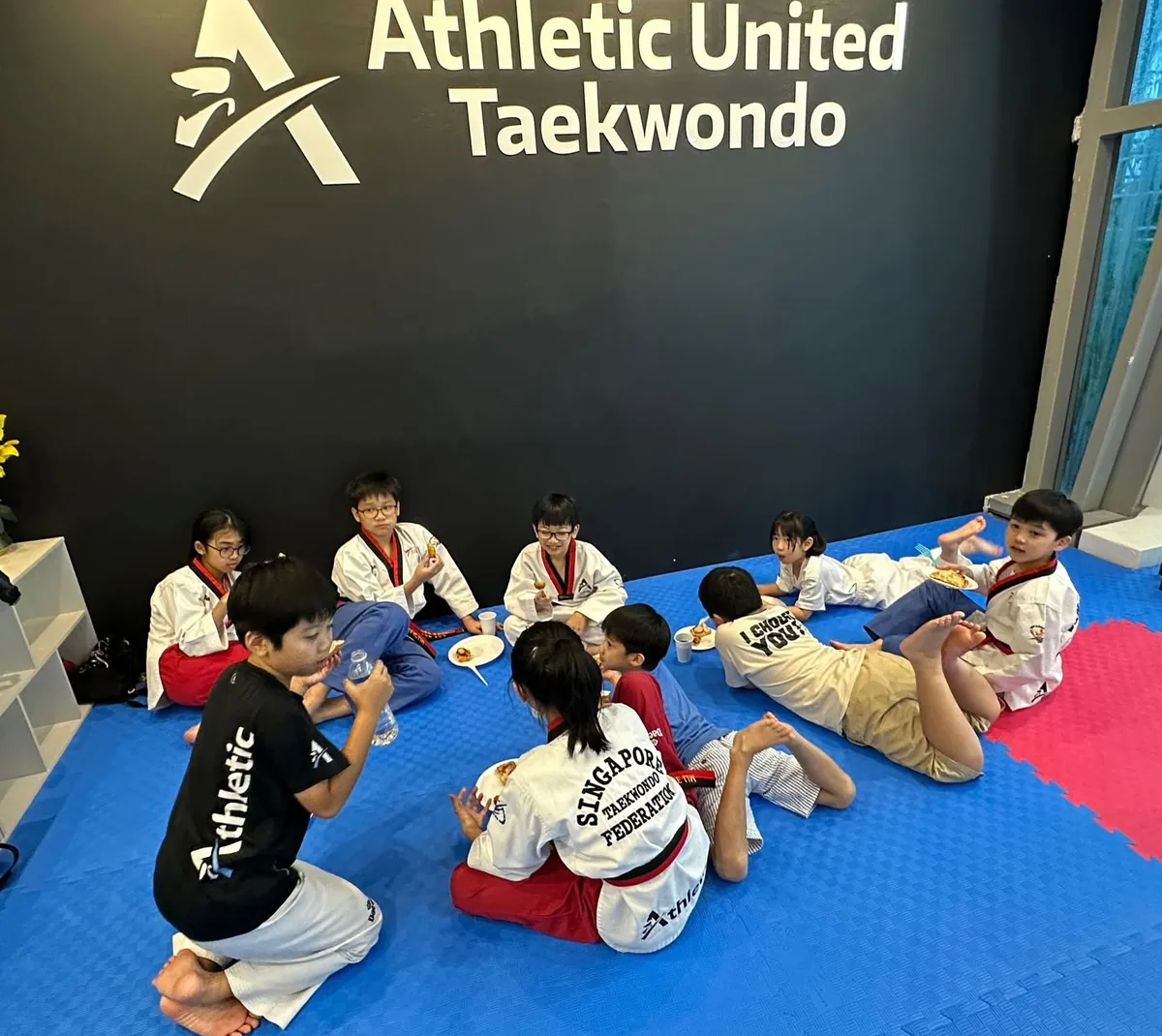
A taekwondo class is loud and mobile: drills, pads, footwork, forms. A jiu-jitsu class is slower and closer, with long stretches of partnered rolling on the mat.
Taekwondo runs ten colour geup ranks with regular gradings, and juniors work towards a poom belt certified to a single worldwide standard. Jiu-jitsu uses a separate junior belt system and promotes far less often — progress is real but much slower to see.
A dobok is light and loose so the legs move freely. A BJJ gi is thick and reinforced because it is grabbed, pulled and stood on throughout every class.
On the Olympics. Taekwondo has been a full Olympic medal sport since Sydney 2000. Jiu-jitsu is not on the Olympic programme. For most families this changes nothing — for a child who may one day want a national pathway, it is worth knowing.
Parents assume the striking art must be riskier. In practice how a school runs its classes matters far more than which art it teaches. Both carry real injury risk when run badly, and both are safe when run well.
What to look for when you visit, whichever art you choose:
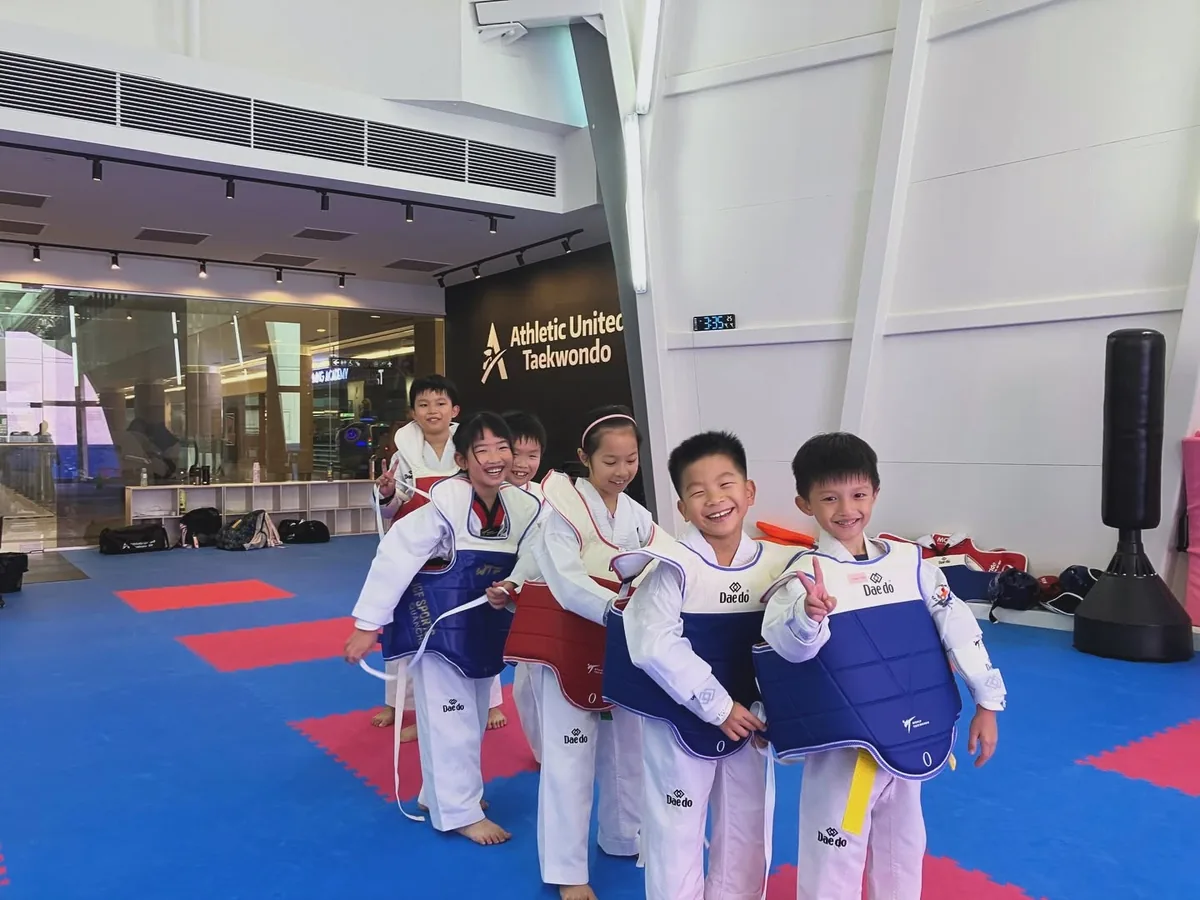
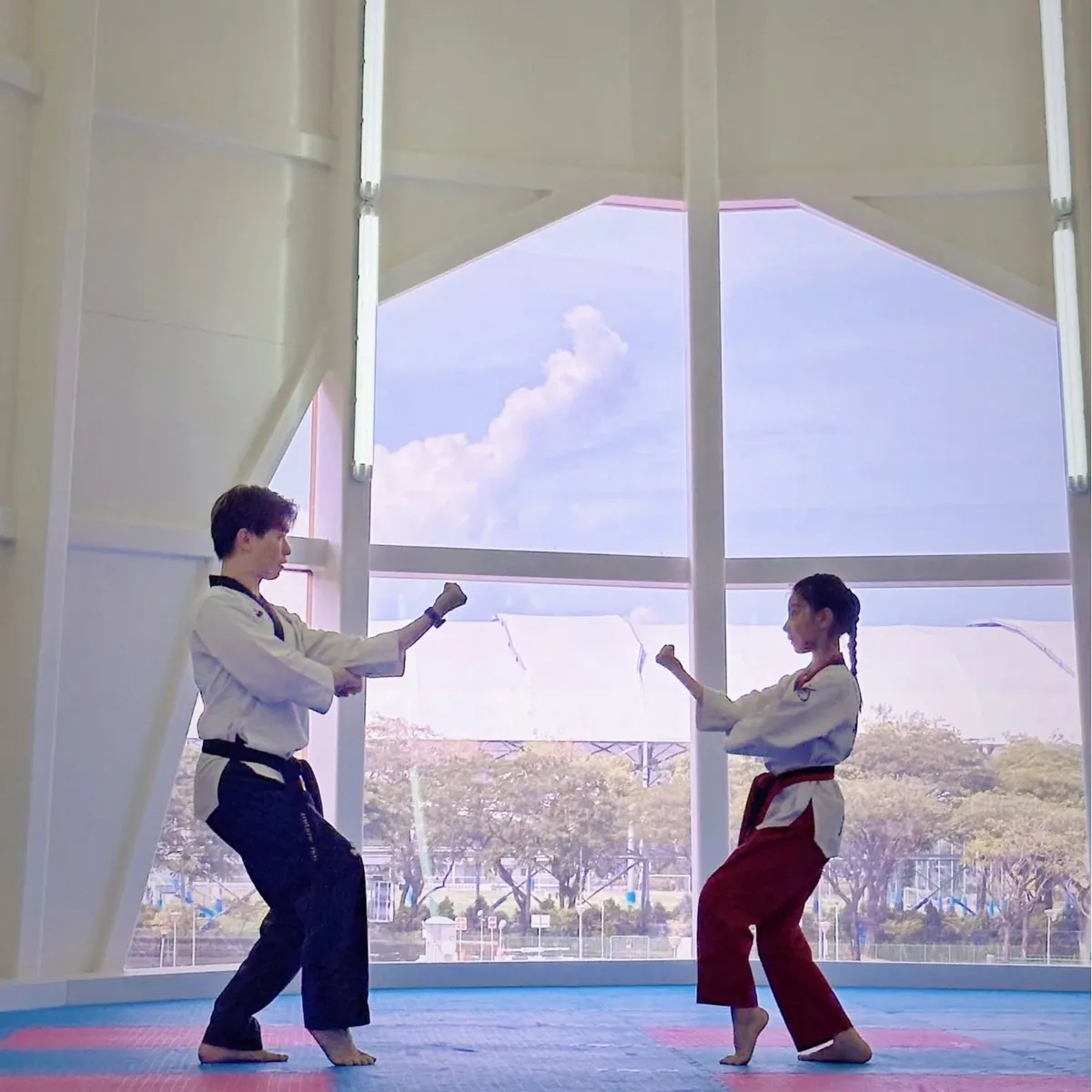
Our youngest group starts at age 3 and never makes contact at all — those lessons are about coordination, listening and following instructions in a group. Sparring is introduced only in the later belts, in full protective gear.
This is where the honest answer helps more than the confident one: they solve different halves of the problem.
Reading space, keeping it, and moving out of reach — plus the awareness and composure to not be there in the first place.
Escaping holds and controlling someone at close range, which is the shape most schoolyard incidents actually take.
Where we would point you to jiu-jitsu: if your specific worry is a child being grabbed, pinned or wrestled down, grappling addresses that more directly than any striking art.
For most primary-school children, though, the awareness, composure and body control that either art builds do more day to day than any particular technique. Confidence changes how a child carries themselves, and that is usually what stops trouble starting.
Taekwondo is one of the sports talents a number of Singapore secondary schools accept for Direct School Admission. See our guide to taekwondo and DSA.
Poomsae (forms) and kyorugi (sparring). A child who dislikes contact can still compete, which is not an option in a grappling art.
Taekwondo ranks are certified to one worldwide standard, which matters for families who relocate.
We take children from age 3, with classes built around short attention spans. Most grappling schools will not start a child until 5 or 6.
Not sure if your child is ready? Come and find out — the trial is free.
Book My Child's Free TrialStill weighing up the options? Start with our guide to martial arts for kids in Singapore. Comparing something else? We have also written up taekwondo vs karate, judo and muay thai for kids.
If taekwondo is on your shortlist, our kids taekwondo classes page sets out what each age group does in class, and the class timetable shows when they run. And since the instructor matters more than the style, these are the three masters who would teach your child.
Founder & Principal
Over ten years of professional teaching experience in both WT (World Taekwondo) and Traditional Taekwondo, from first-timers to competitive athletes.
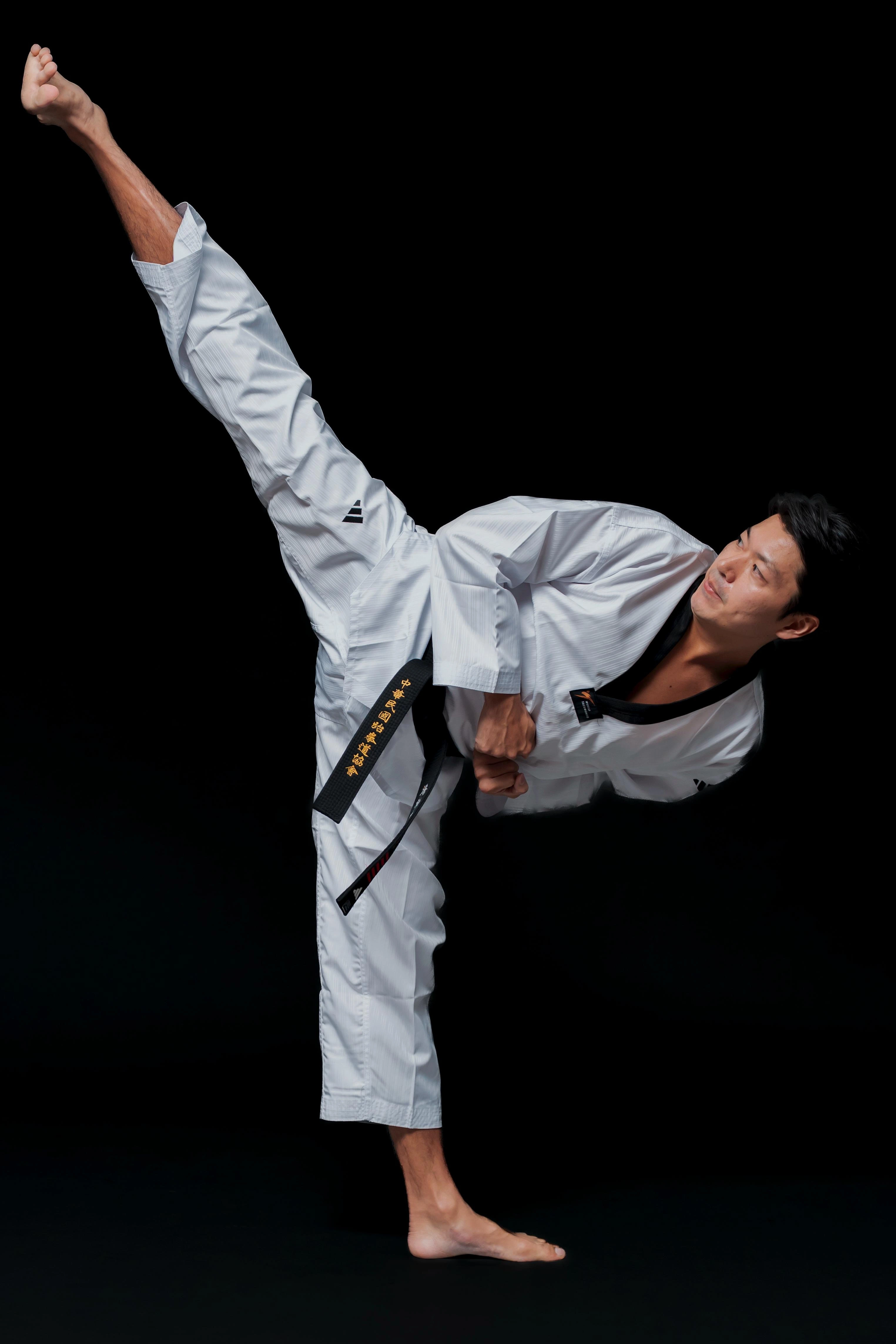
Senior Instructor & Kyorugi Competition Instructor
Kukkiwon 5th Dan, leading our sparring classes and guiding students who want to compete.

Poomsae Competition Instructor & SEA Games Gold Medallist
Former National Taekwondo Athlete, specialising in poomsae technique and helping students refine how they perform.
Taekwondo is a striking art fought standing at a distance, built around kicks, footwork and forms. Brazilian jiu-jitsu is a grappling art fought on the ground, built around position, control and submissions, with no striking at all. The two share almost no technical ground.
Neither is better in absolute terms. Taekwondo suits energetic children who like to move and can start as young as 3. BJJ suits patient children who are comfortable in close physical contact, and usually starts at 5 or 6. Your child's temperament is the deciding factor.
They cover different halves of the problem. Taekwondo trains distance, timing and awareness; jiu-jitsu trains escaping holds and controlling someone at close range. If your specific concern is your child being grabbed or pinned, grappling addresses that more directly.
Safety depends more on the school than the art. In a well-run class of either discipline, beginners do not spar or roll at full intensity, children are grouped by age and size, and protective equipment or proper matting is mandatory. Visit and watch before you judge an art on safety.
Eventually, yes — they complement each other well. We would not recommend it in the first year, though. Learning one art properly builds the discipline and body control that make the second easier later.
No. Taekwondo has been a full Olympic medal sport since the Sydney 2000 Games; Brazilian jiu-jitsu is not on the Olympic programme. This only matters if your child may eventually want a national or international competition pathway.
A dobok is light and loose so the legs move freely for kicking. A BJJ gi is thick and heavily reinforced because it is gripped, pulled and knelt on throughout every session. The two are not interchangeable.
Not meaningfully. The setting — community course, private academy or 1:1 — affects price far more than the art does. Our kids classes start from $37.80 a lesson, and the full list is on our class fees page.
There is no good evidence putting one ahead of the other, and we would not claim otherwise. The difference that matters in practice is sensory rather than technical: jiu-jitsu involves sustained close physical contact with another person, which some children find grounding and others cannot tolerate at all. Taekwondo keeps more distance and is more predictable in its structure. If your child is contact-averse, that distinction will decide it faster than any comparison of the arts themselves. Our page on taekwondo for children with ADHD or autism covers this in more detail.
Thirty minutes on the mats will tell you more than any amount of reading. Book a free trial, watch your child in a real kids taekwondo class, and decide from there. No charge, no obligation.
Still not finding it? Ask us directly — we usually reply within the hour.