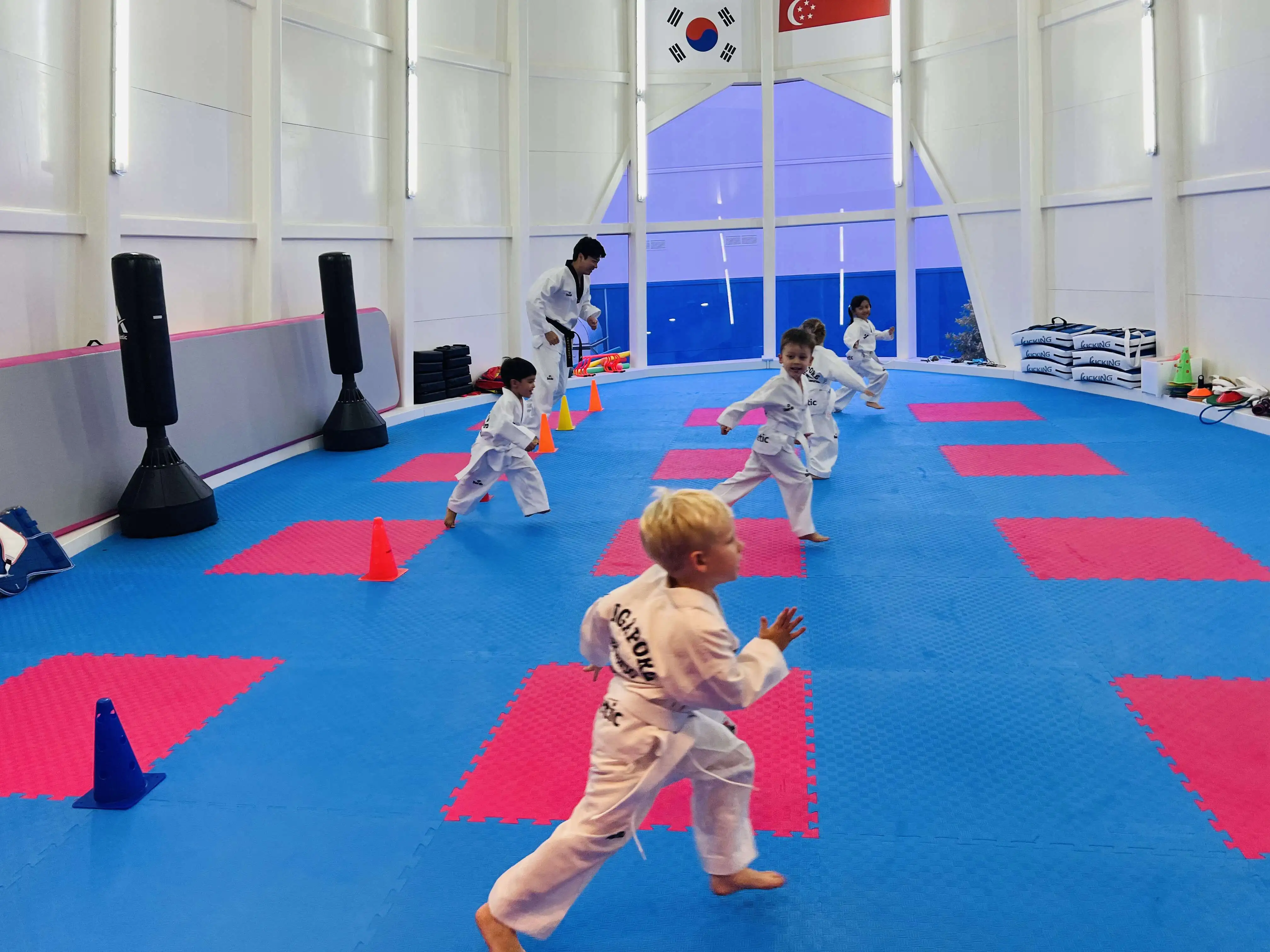
What Age Can You Start Taekwondo?
From age 3 to well past 50 — what each age group actually trains, how to tell if a child is ready, and whether it is ever too late to begin.
Book a Free Trial Class
From age 3 to well past 50 — what each age group actually trains, how to tell if a child is ready, and whether it is ever too late to begin.
Book a Free Trial Class
Two very different people ask this question. One is a parent working out whether their three-year-old is too young. The other is an adult wondering whether thirty-five is too late.
The short answers: we take children from 3, and there is no upper limit at all. The longer answers are below, because what matters at each age is not the number but what the class is built to do.

| Age | Class | What it is really about |
|---|---|---|
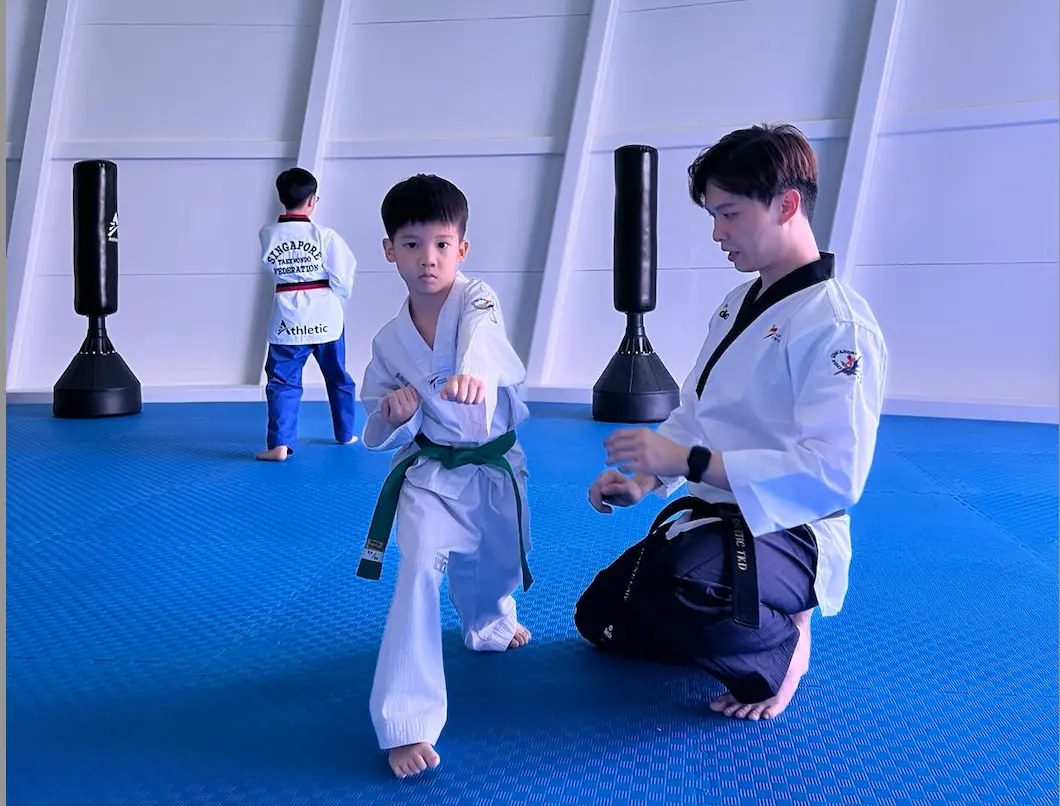
| 3–5 | Tots | Coordination, listening, following a sequence. No contact at all. |
| 5–7 | T-Kids | Real technique begins, plus Foundation levels before the colour belts. |
| 7–12 | T-Kids, then Sparring | The belt ladder in earnest, and contact introduced gradually in full gear. |
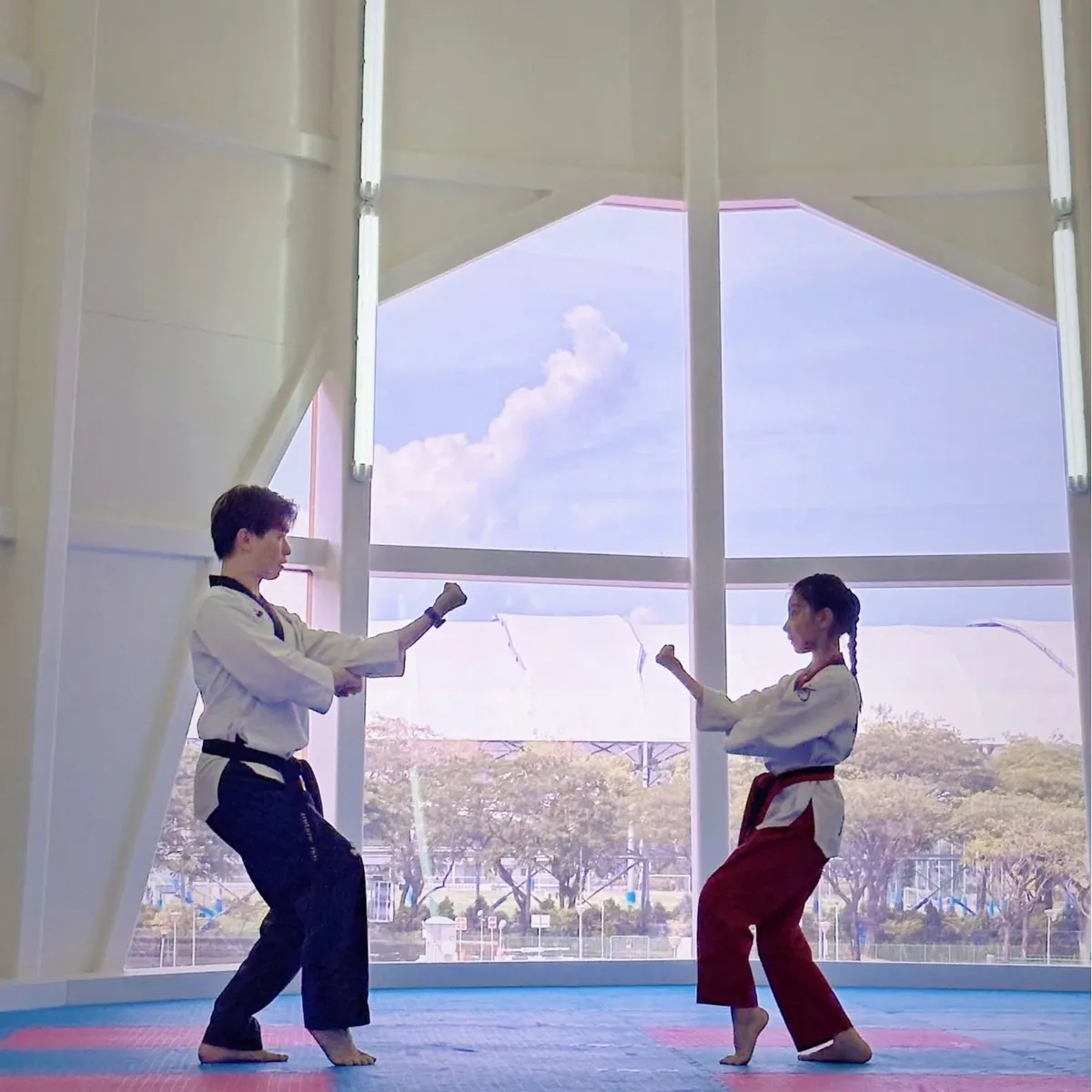
| 13–14 | T-Kids / Sparring | Competition becomes an option, in poomsae or kyorugi or both. |
| 15+ | Adults & Teens | All levels together, including complete beginners of any age. |
Ages are guides, not gates — a mature four-year-old and a boisterous six-year-old are placed where they will do best. Full details on the class timetable, in kids classes and adult classes.
Birthdays are a poor predictor. These four things matter more, and you can judge all of them at home.
If two or three of those are a yes, book a trial in our kids taekwondo classes. A single class answers this better than any checklist — and if your child is genuinely not ready, we will say so and suggest you come back in a few months rather than take your money.
No. It is the most common worry adult beginners bring, and it is almost always misplaced.
Nobody arrives able to kick head-height. It comes from months of consistent stretching, and an adult who turns up twice a week gets there.
What a child gains in flexibility, an adult gains in focus and memory. Poomsae comes quickly to people who can concentrate for an hour.
Sparring is optional. Plenty of adults train for years on technique, forms and fitness without ever taking a hard shot.
Parents of enrolled children train from $100 a month. It is the cheapest adult option and the one families most often overlook.
Twice a week also lands an adult comfortably inside the amount of activity adults are advised to get each week. The honest caveat: an adult beginner progresses at their own pace, and that pace is set by how often you come, not by how old you are. Our adult classes run on weekday mornings and evenings as well as Sunday afternoons, which is what makes twice a week realistic around a job.
In one specific way, yes. Students under 15 who reach black-belt standard are awarded a poom belt — the junior equivalent — rather than a full dan rank, which converts to a dan grade once they are old enough. Everything below black belt is the same ladder for every age.
Younger children also work through Foundation levels (F1–F3) before joining the colour-belt syllabus proper. The belts page sets out the whole order, and the grading page explains how the tests themselves work.
Whatever your age, the first class is free.
Book a Free TrialBoth started at four. Here is where that led.
There is no single best age. Between 5 and 7 a child can absorb real technique while still picking up flexibility easily, which makes it a natural starting point. Starting at 3 builds coordination and listening first; starting at 10 or 15 is perfectly normal and those students often progress quickly.
We take children from 3 years old, in Tots classes built around short attention spans with no contact at all. Many schools start at 5 or 6, so check the age policy rather than assuming.
Not if they can follow a two-step instruction and stay in line for a short turn. At that age the class is about coordination, listening and confidence rather than martial arts technique. Come for a free trial and we will tell you honestly whether to start now or in a few months.
Yes. Adult beginners start with us at every age, and flexibility is trained rather than inherited — nobody arrives able to kick head-height. Sparring is optional, so you decide how much contact you want, if any.
No. A 16-year-old beginner joins our adults and teens class, learns faster than a young child does, and has years ahead to reach black belt. Age only closes doors in elite competition, and that is a narrow concern.
Yes, and many do. Parents of enrolled children train from $100 a month on a 3-month commitment, which is the cheapest adult option we offer. See the class fees page.
No. Fitness and flexibility are what training builds, not what it requires. The only thing that matters at the start is a willingness to try.
Students under 15 who reach the standard receive a poom belt, the junior equivalent, which converts to a dan grade later. There is no upper age limit on grading at all.
Not with us — our youngest group starts at 3. Two year olds are generally still developing the balance and the attention span a class relies on, and starting a year later tends to go far better than starting too early and deciding martial arts is not for them. If you have concerns about your child's development, do consider a child development assessment.
Tell us how old you or your child are and what your week looks like, and we will put you in the right group for a free 30-minute trial — kids classes from age 3, or adult classes at any age.
Still not finding it? Ask us directly — we usually reply within the hour.