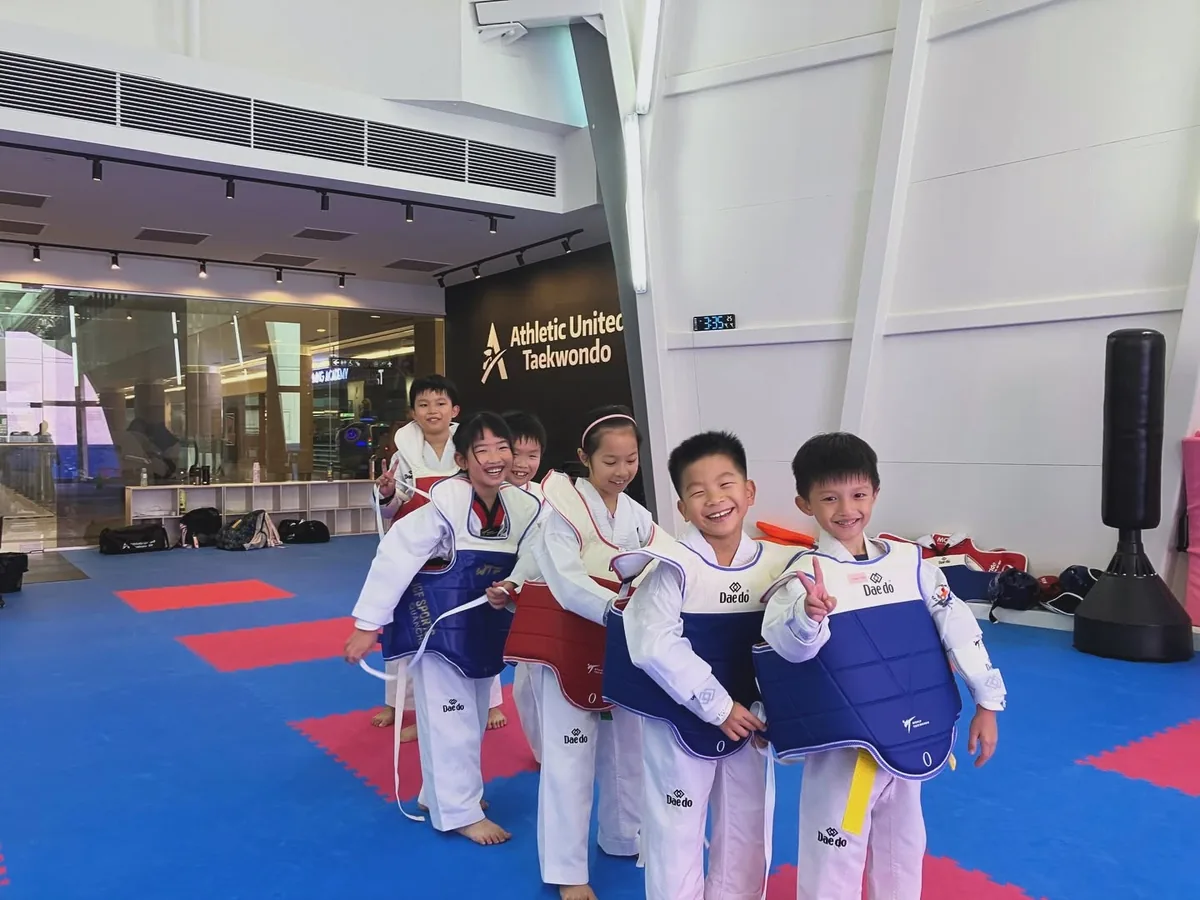
Taekwondo vs Muay Thai for Kids: Which Should You Choose?
An honest comparison of taekwondo and muay thai for children in Singapore — two striking arts that differ most in how hard, and how young, a child trains.
Book a Free Trial Class
An honest comparison of taekwondo and muay thai for children in Singapore — two striking arts that differ most in how hard, and how young, a child trains.
Book a Free Trial Class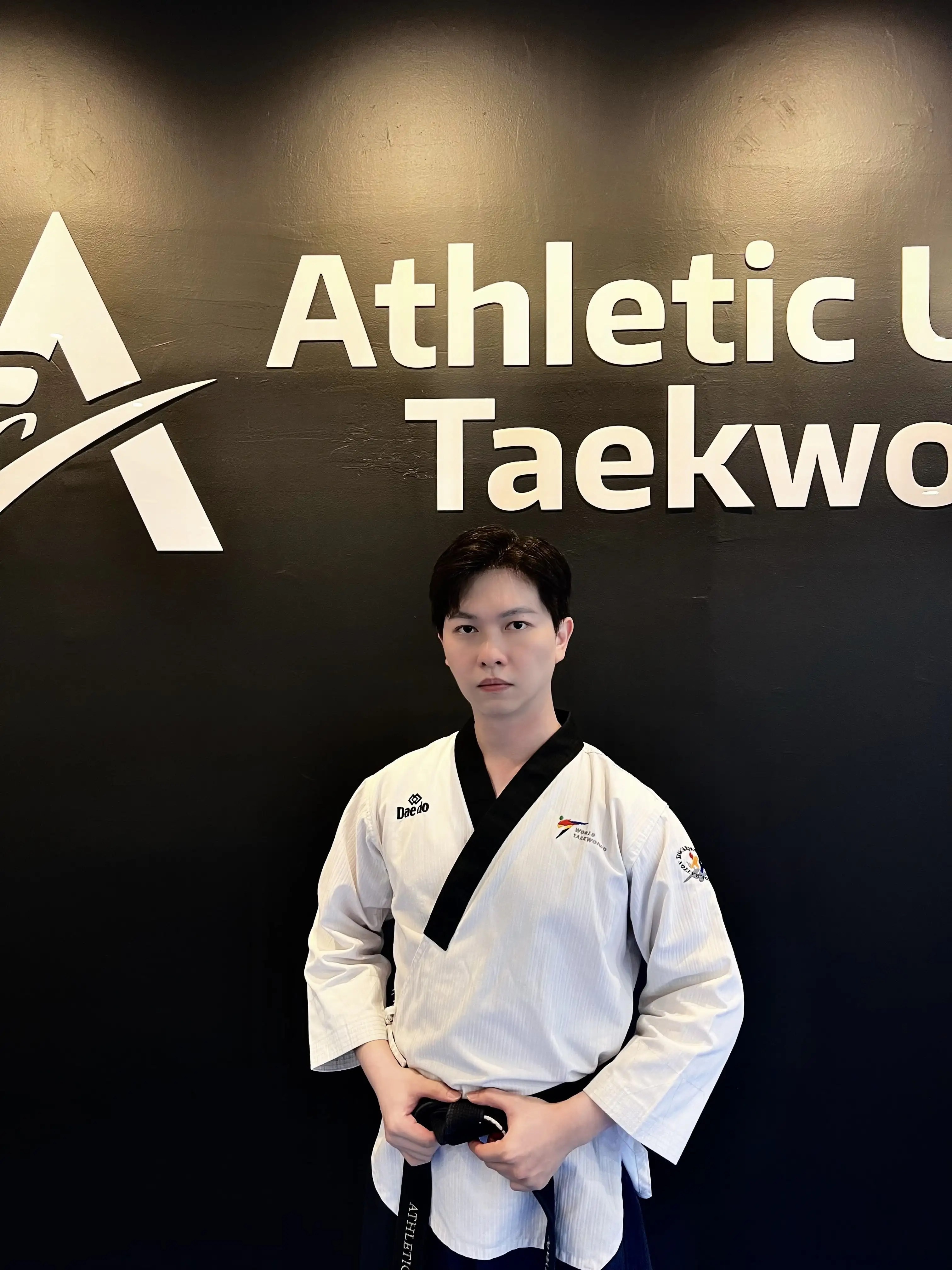
Both of these are striking arts, so the usual striking-versus-grappling question does not apply here. What separates them is intensity and age: muay thai is the most physically demanding martial art a child is likely to be offered in Singapore, and most gyms will not take a child until they are around 7.
Here is what each one asks of a child, and which children tend to thrive in each.

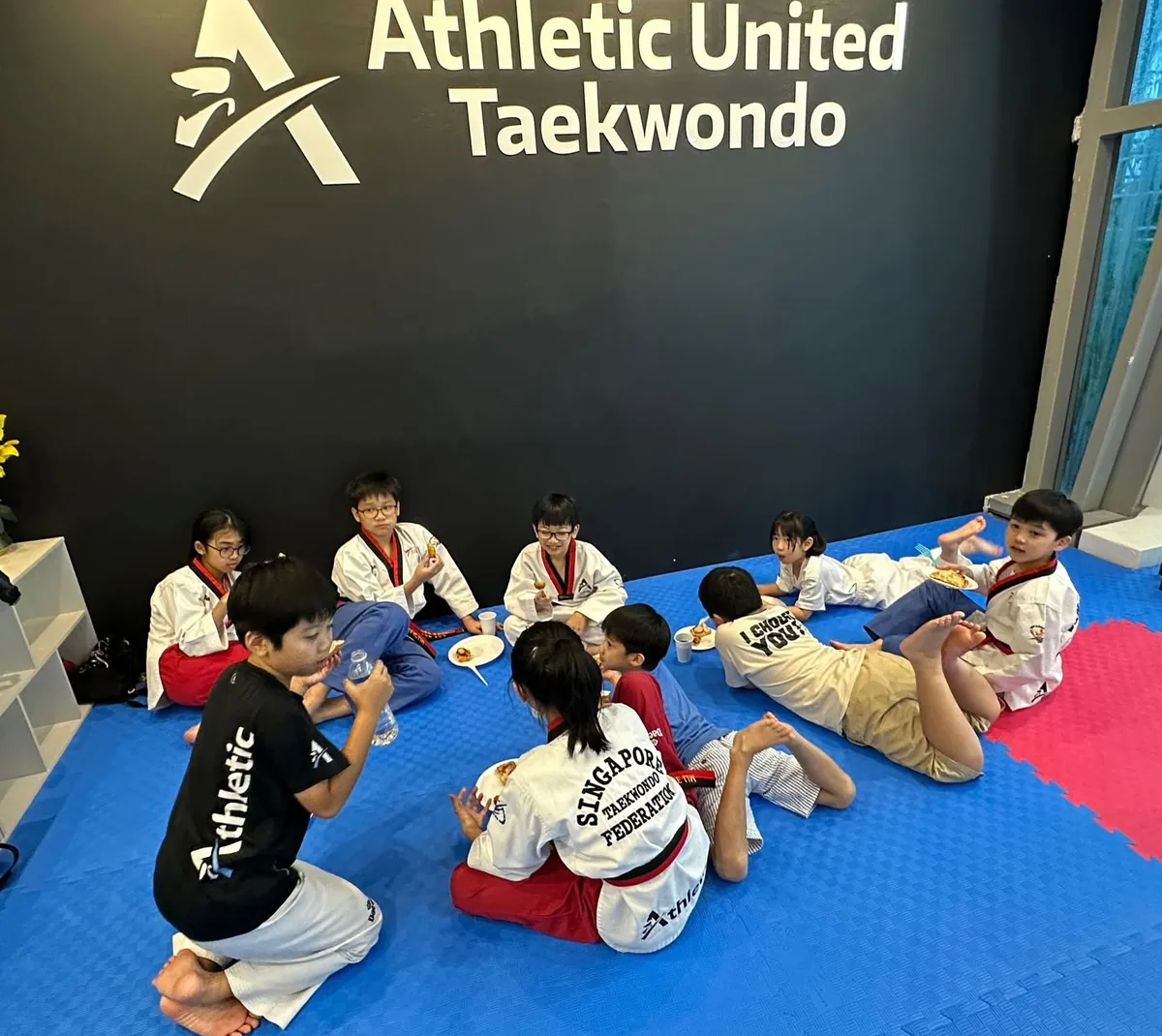
Or read on — the comparison table is just below.
Choose taekwondo if your child:
Choose muay thai if your child:
Muay thai is a superb art and a serious workout. The question is rarely which is better — it is whether your child is old enough, and whether they want structure and progression or sweat and sparring.
The two arts side by side, as a parent would weigh them.
| Taekwondo | Muay Thai | |
|---|---|---|
| Weapons used | Kicks and punches | Fists, elbows, knees and shins |
| Close range | Broken up — fighters reset | The clinch is central to the art |
| Typical start age | 3–4 | 7–8 |
| Progression | Ten colour belts with regular gradings | Traditionally none; many gyms run their own |
| Forms practice | Yes — poomsae, competed in its own right | No equivalent |
| Olympic sport | Yes, since Sydney 2000 | No — IOC recognised, not on the programme |
| Suits a child who… | Wants structure, progress and a clear goal | Is older and wants hard physical work |
Muay thai is known as the art of eight limbs — fists, elbows, knees and shins. Taekwondo deliberately narrows the toolkit to kicks and punches, which is part of why it can be taught safely to much younger children.
A muay thai session is built on rounds, pads and relentless conditioning. A taekwondo class spends more of its time on technical detail, footwork and patterns — still hard work, but structured differently.
Taekwondo gives a child something concrete to work towards every few months, through to the junior poom belt. Traditional muay thai has no belt system at all, which suits some children and leaves others without a visible sense of progress.
Taekwondo sparring is scored through body protectors and head guards, with contact introduced late. Reputable kids' muay thai gyms also limit contact heavily — but the art's full form is far more punishing, so what a gym allows matters enormously.
On the Olympics. Taekwondo has been a full Olympic medal sport since Sydney 2000. Muay thai's international federation holds IOC recognition, but the sport is not on the Olympic programme. For a child who may want a national pathway one day, that difference is worth knowing.
For most families asking this question, the answer is settled by a birthday rather than a preference.

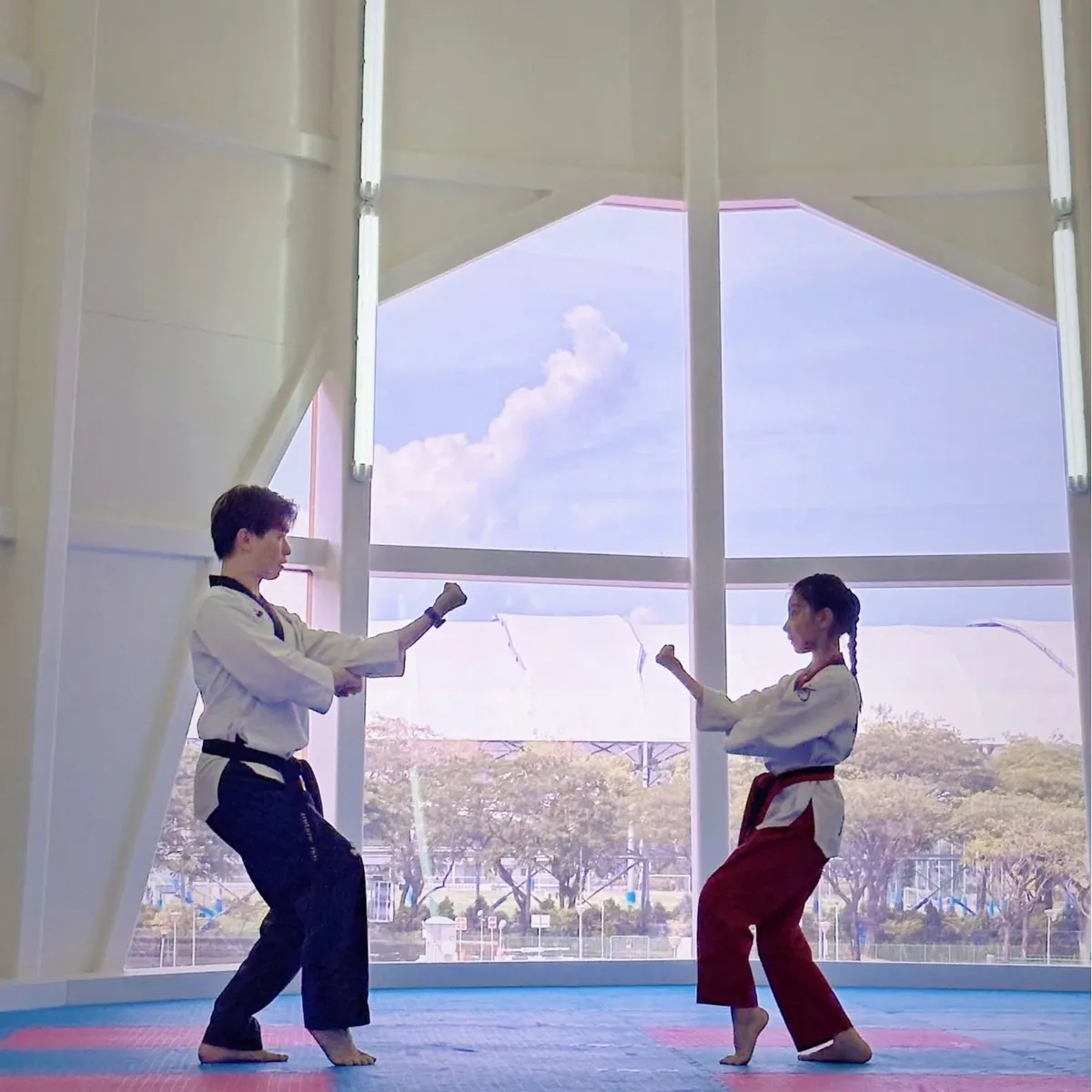
Our Tots classes involve no contact at all — three- to five-year-olds work on coordination, listening and following a sequence. Contact arrives years later, in full protective gear, once a child can control it.
Muay thai wins on raw conditioning — few children's activities are harder. Taekwondo builds flexibility, balance and single-leg stability unusually well, which transfers to almost every other sport.
Both demand it. Taekwondo makes it more visible through belt criteria, bowing and formal etiquette, which many parents find helps carry the habit into school.
Muay thai's techniques are more directly combative. For a primary-school child, though, awareness, composure and body control do more day to day than any specific technique from either art.
Taekwondo offers poomsae as well as sparring, so a child who dislikes being hit can still compete seriously. Muay thai competition means fighting.
Where we would point you to muay thai: an older teenager who is already fit, wants the hardest training available and is drawn to the practical side rather than the traditional one will likely get more out of a good muay thai gym than out of us.
Taekwondo is one of the sports talents a number of Singapore secondary schools accept for Direct School Admission. See our guide to taekwondo and DSA.
The single biggest practical difference. Four years of coordination, listening and confidence-building before a muay thai gym would even take your child.
Taekwondo ranks are certified to one worldwide standard, which matters for families who relocate — and gives a child a record of progress that follows them.
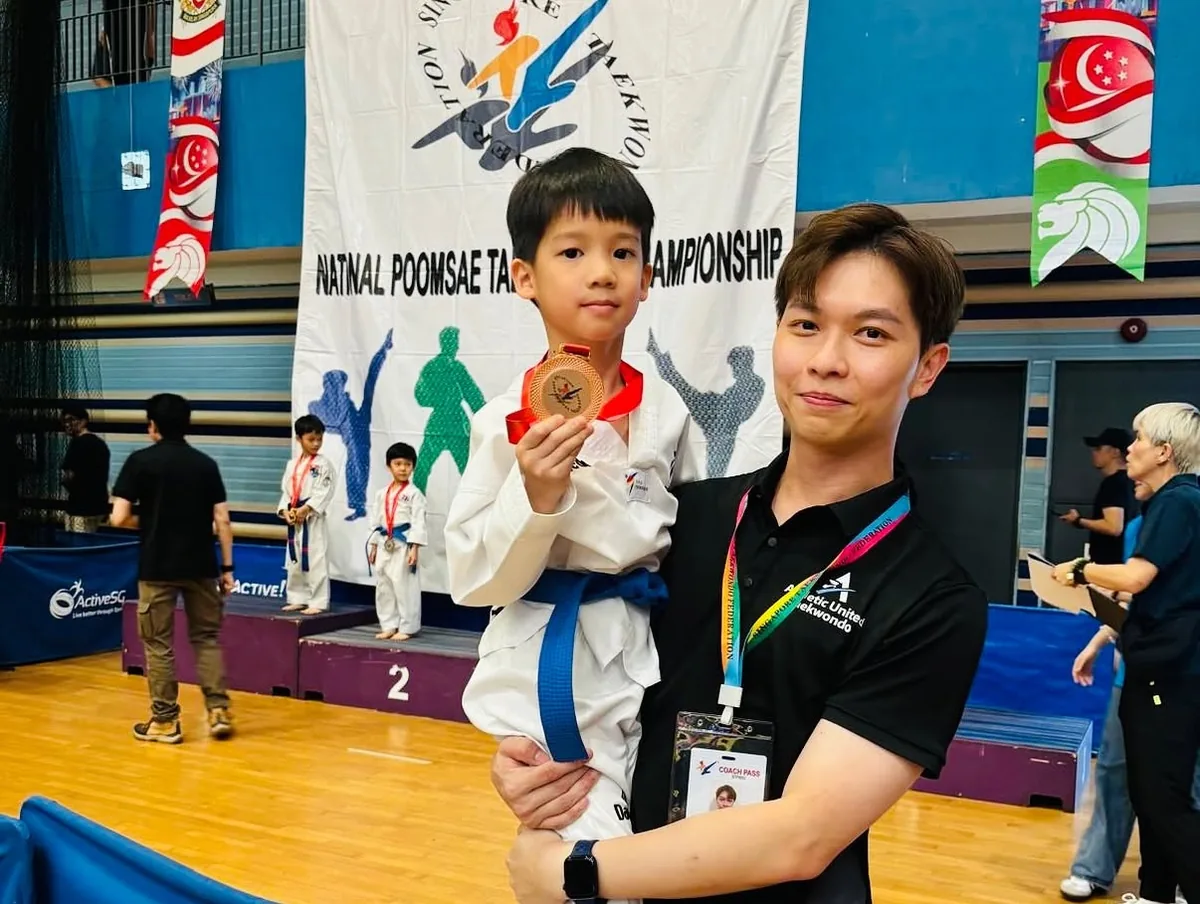
Poomsae and kyorugi. A child can take competition seriously without ever taking a hard shot.
Not sure if your child is ready? Come and find out — the trial is free.
Book My Child's Free TrialStill weighing up the options? Start with our guide to martial arts for kids in Singapore. Comparing something else? We have also written up taekwondo vs karate, jiu-jitsu and judo for kids.
If taekwondo is on your shortlist, our kids taekwondo classes page sets out what each age group does in class, and the class timetable shows when they run. And since the instructor matters more than the style, these are the three masters who would teach your child.
Founder & Principal
Over ten years of professional teaching experience in both WT (World Taekwondo) and Traditional Taekwondo, from first-timers to competitive athletes.
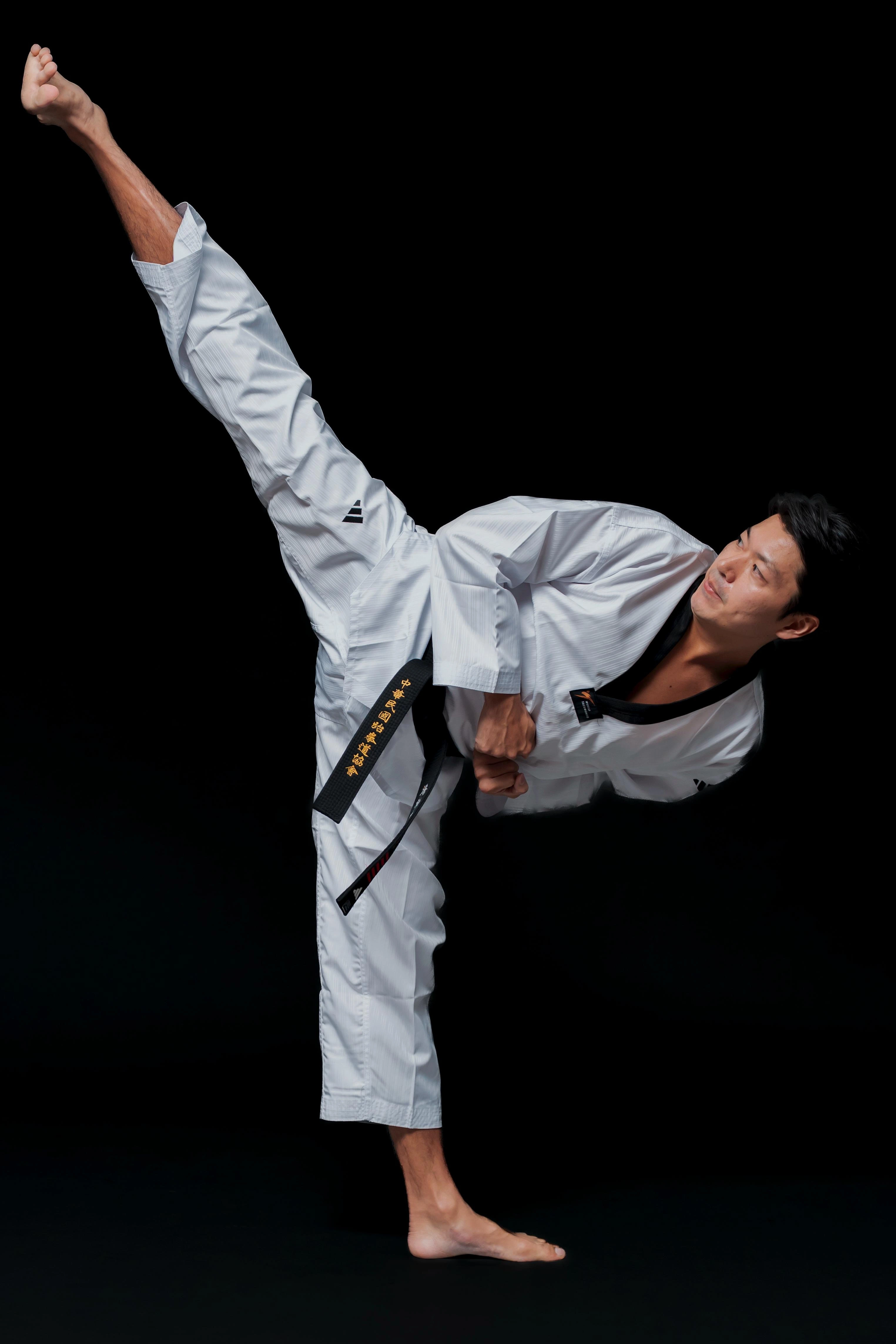
Senior Instructor & Kyorugi Competition Instructor
Kukkiwon 5th Dan, leading our sparring classes and guiding students who want to compete.

Poomsae Competition Instructor & SEA Games Gold Medallist
Former National Taekwondo Athlete, specialising in poomsae technique and helping students refine how they perform.
Both are striking arts, but muay thai uses fists, elbows, knees and shins and fights in the clinch, while taekwondo scores with controlled kicks and punches at range and breaks up close-quarters exchanges. Taekwondo also has a formal belt system and forms practice; traditional muay thai has neither.
For young children, taekwondo — most muay thai gyms will not accept a child until around 7, while we start at 3. From about 7 onwards both are viable, and the choice comes down to whether your child is motivated by structured progression or by hard physical training.
Most Singapore gyms start children at around 7 or 8, though some take younger children into modified classes. Taekwondo is commonly taught from 3 or 4, which is why it is often a child's first martial art.
Not in a well-run kids' class, where contact is limited and the emphasis is on pads and technique. The art's full form is punishing, though, so what a particular gym allows matters enormously. Ask directly how and when contact is introduced.
Traditionally no. Many modern gyms run their own grading or armband systems, but there is no single international standard. Taekwondo has ten colour belts through to the junior poom belt, with internationally recognised certification behind them.
Muay thai, on raw conditioning — it is one of the hardest workouts a child can take up. Taekwondo builds flexibility, balance and single-leg stability more, which transfers well into other sports.
No. Its international federation holds IOC recognition, but muay thai is not on the Olympic programme. Taekwondo has been a full Olympic medal sport since the Sydney 2000 Games.
Not meaningfully. The setting — community course, private academy or 1:1 — affects price far more than the art does. Our kids classes start from $37.80 a lesson, and the full list is on our class fees page.
For an adult, muay thai has the stronger claim — elbows, knees and clinch work are built for close range, which is where most real incidents happen. For a child, the question is different. A child is not going to out-strike an adult at any range, so what actually protects them is awareness, distance and the confidence not to freeze. Taekwondo delivers those without the heavy contact that muay thai relies on to teach its own lessons. That contact is also why muay thai schools generally start children later. See our guide to martial arts for kids.
Thirty minutes on the mats answers this better than any article. Book a free trial, watch your child in a real kids taekwondo class, and see whether it holds their attention. No charge, no obligation.
Still not finding it? Ask us directly — we usually reply within the hour.