Taekwondo vs Karate for Kids: Which Should You Choose?
An honest comparison of taekwondo and karate for children in Singapore — what each one actually teaches, and how to pick the right fit for your child.
Book a Free Trial Class
An honest comparison of taekwondo and karate for children in Singapore — what each one actually teaches, and how to pick the right fit for your child.
Book a Free Trial Class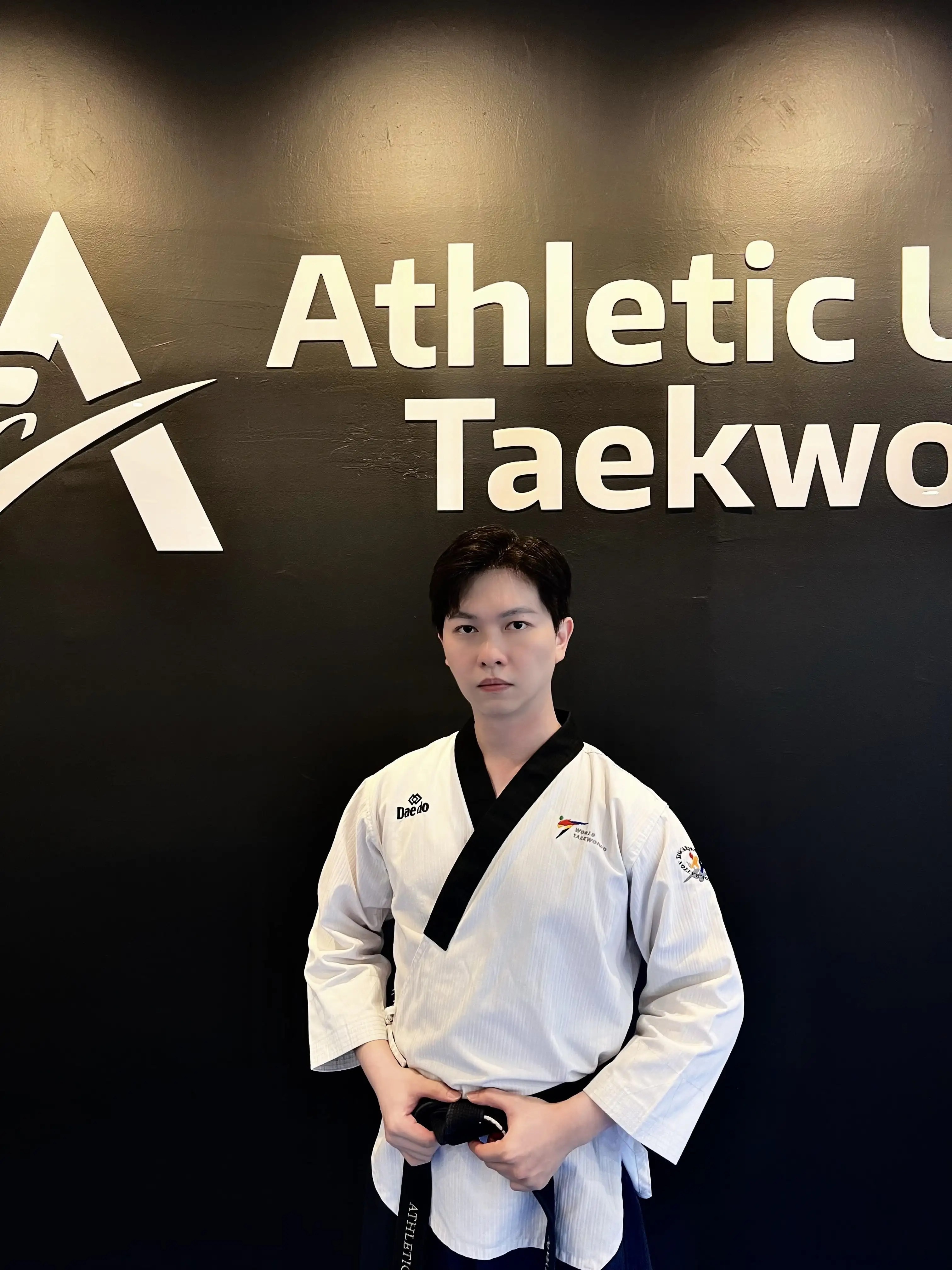
Most parents researching martial arts for their child hit the same question: taekwondo or karate? They look alike from the door — white uniforms, coloured belts, bowing — but they train quite different things.
Taekwondo is what we teach, so here is the useful version: what each art actually trains, and which children thrive in each.
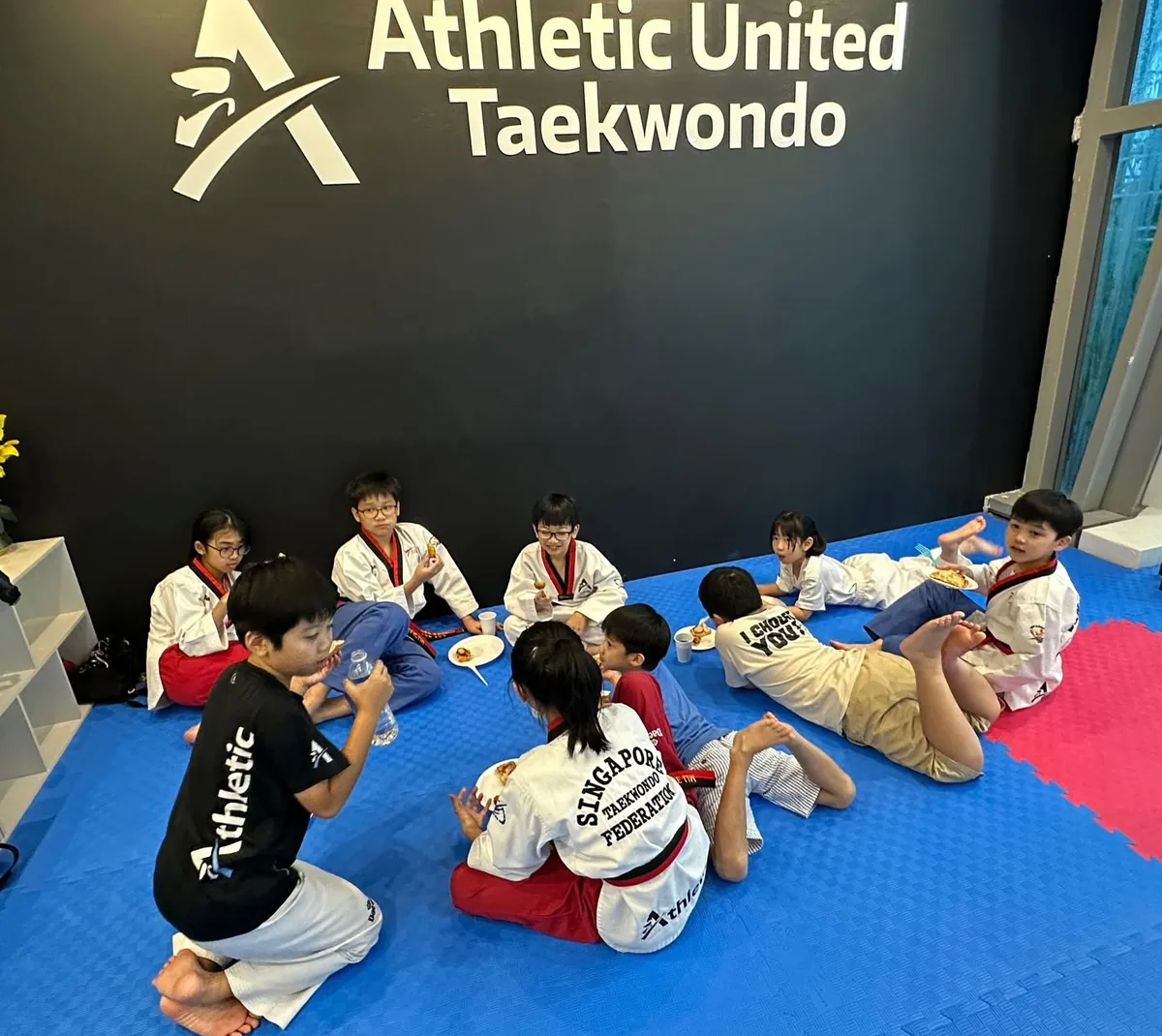
Or read on — the comparison table is just below.
Choose taekwondo if your child:
Choose karate if your child:
Both teach discipline, respect and self-defence, and both use coloured belts. The real difference is how the class feels — which is why your child's reaction to a trial beats anything on this page.
The two most commonly confused martial arts for children in Singapore, side by side.
| Martial art | Main focus | Typical start age | Olympic sport | Suits a child who… |
|---|---|---|---|---|
| Taekwondo | Kicking, footwork, forms (poomsae), sparring | 3–4 | Yes | Has energy to burn and likes to move |
| Karate | Hand strikes, stances, kata, blocks | 4–5 | No (featured at Tokyo 2020 only) | Likes precision and getting it exactly right |
Start ages are what schools in Singapore typically accept, not hard rules — individual academies vary, and readiness matters more than birthdays.
They look similar from the car park — white uniforms, coloured belts, bowing, Asian terminology. Inside the hall they train quite different things.
Taekwondo is built around the legs — fast, high, spinning kicks. Karate splits attention between hand strikes and lower, grounded kicks.
Taekwondo sparring is mobile: bouncing, switching, covering distance. Karate works from rooted stances and hip rotation.
The same idea, different name: set patterns that build memory, balance and precision. Both can be competed without sparring.
Taekwondo is Korean, and its ranks are certified to one worldwide standard. Karate is Japanese and Okinawan, split across several federations.
On the Olympics. Taekwondo has been a full Olympic medal sport since Sydney 2000. Karate appeared at Tokyo 2020 but was not included at Paris 2024 or on the Los Angeles 2028 programme. For most families this is irrelevant; for a child who may one day want a national or international pathway, it is not.
Parents ask this more than any other question, and it has a fairer answer than most websites give: how a school runs its classes matters more than which art it teaches.
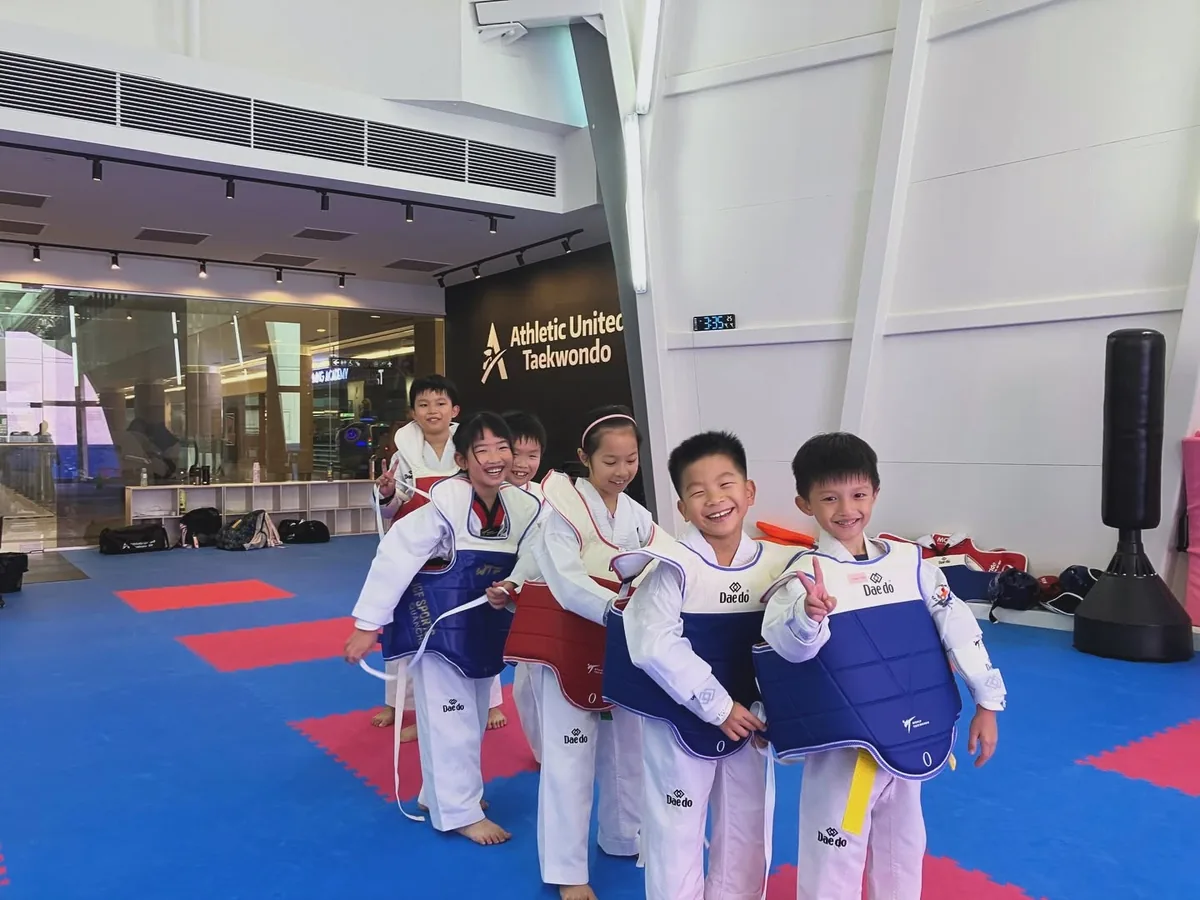
In a well-run children's class of any discipline, beginners do not spar at full contact. They drill technique against pads and air, they learn control before they learn power, and protective equipment is mandatory long before contact increases. In a badly run class, any of these arts can produce avoidable injuries.
What to look for when you visit, whichever art you choose:
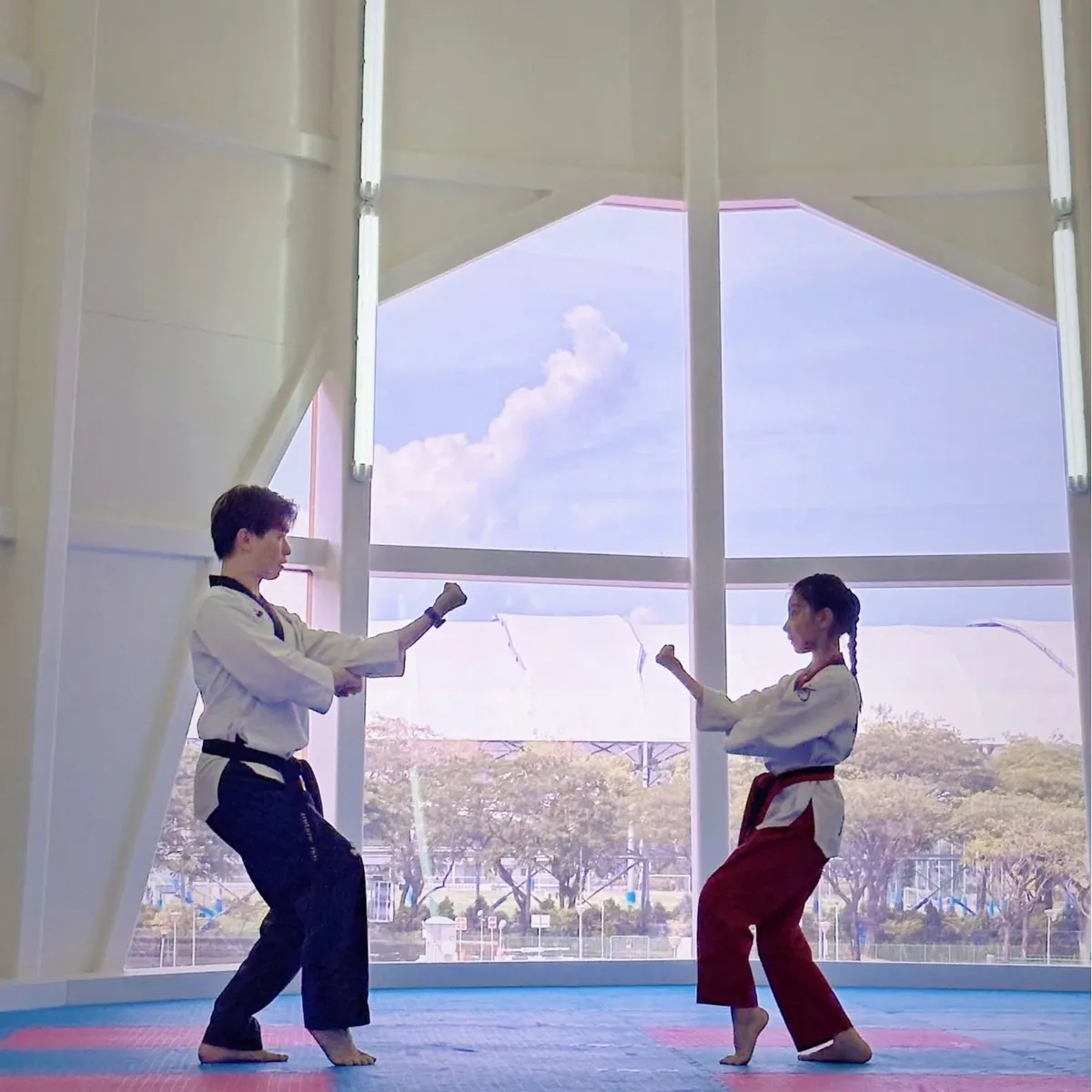

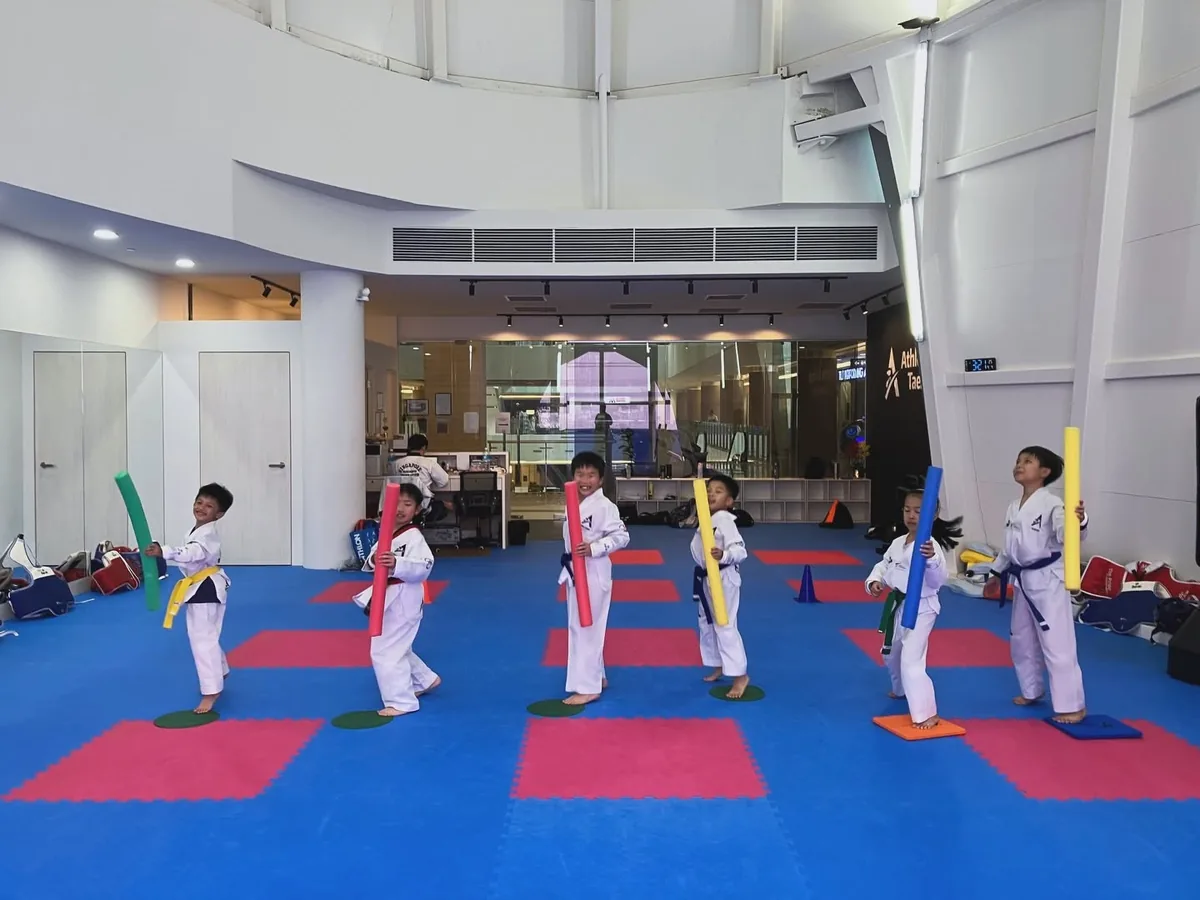
At our school, children start from age 3 with no contact at all — the youngest groups work on coordination, listening and basic movement. Sparring is introduced much later, with full protective equipment, once a student has the control to apply it safely.
Most parents are not really choosing a fighting style. They want a child who listens, stands up straight, finishes what they start and is not frightened of other children. Here is how the arts differ on those specific outcomes.
All traditional martial arts deliver this, and the belt systems in taekwondo and karate do it particularly visibly — a child can see exactly what they are working towards and what is required to get there.
Confidence comes from measurable progress, and that is a function of good gradings and good instruction rather than the art itself. A child who passes a belt grading they prepared for carries that into school.
Taekwondo is the more cardio-intensive of the two. Its kicking range also builds flexibility, balance and single-leg stability unusually well — useful for almost every other sport a child plays.
Honestly: both cover part of the problem. For most primary-school children, the awareness, composure and body control matter more day to day than any specific technique.
If the broader outcomes are what you are after, our guide to the benefits of taekwondo goes into the physical, mental and social effects in more detail.
Beyond the training itself, taekwondo has a few practical advantages in the Singapore context that are worth knowing about.
Taekwondo is one of the sports talents a number of Singapore secondary schools accept for Direct School Admission. Our guide to taekwondo and DSA explains how the scheme works and how early a child needs to start.
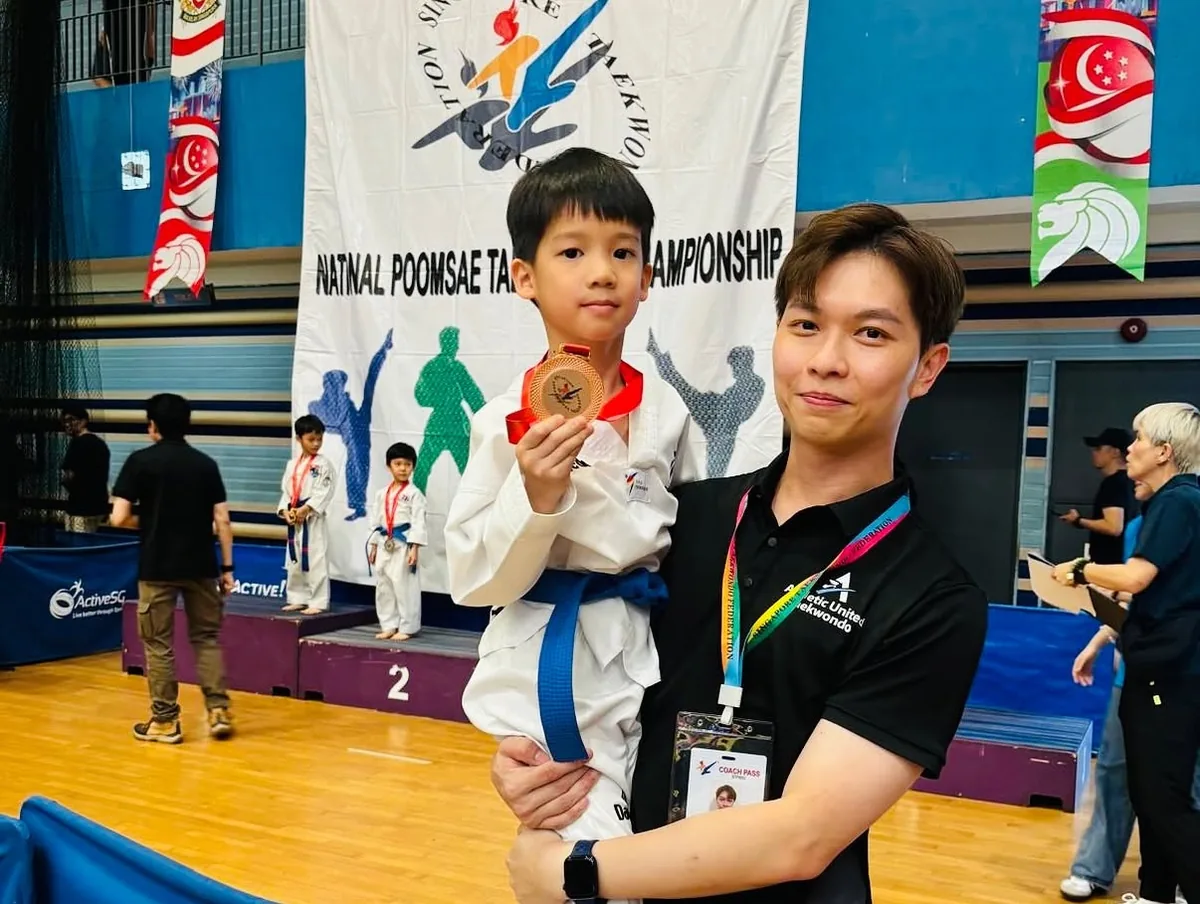
Local tournaments through to national and international events, in both poomsae and kyorugi. Children who are not interested in sparring can still compete in forms.
Taekwondo ranks are certified to one worldwide standard, which matters for families who relocate. The junior poom belt system gives children a black-belt equivalent appropriate to their age.
We take children from age 3, with classes designed around attention spans rather than against them. Many martial arts schools will not start a child until 5 or 6.

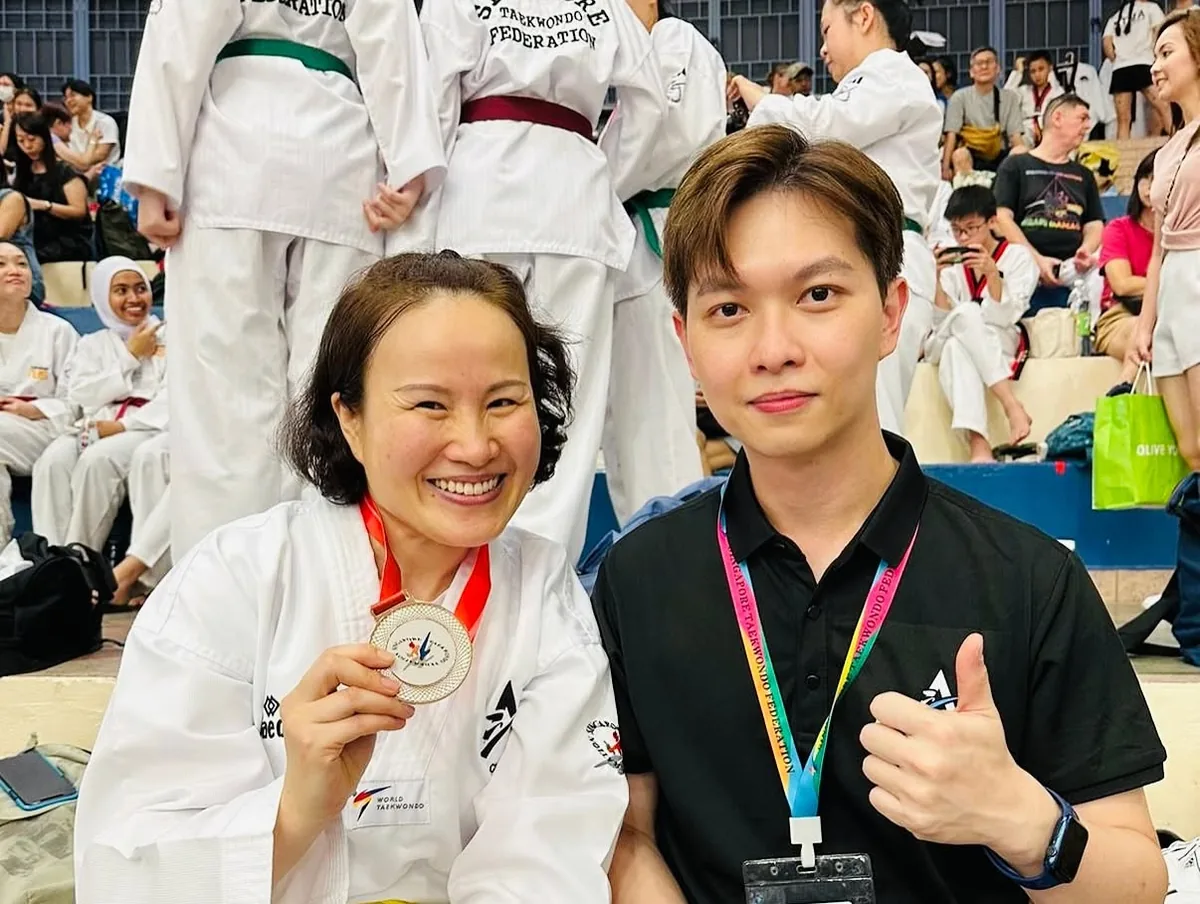
Not sure if your child is ready? Come and find out — the trial is free.
Book My Child's Free TrialReading comparisons only gets you so far. This is the process we would use ourselves.
Still weighing up the options? Start with our guide to martial arts for kids in Singapore. Comparing something else? We have also written up taekwondo vs jiu-jitsu, judo and muay thai for kids.
If taekwondo is on your shortlist, our kids taekwondo classes page sets out what each age group actually does in class. And since the instructor matters more than the style, these are the three masters who would be teaching your child.
Founder & Principal
Over ten years of professional teaching experience in both WT (World Taekwondo) and Traditional Taekwondo, from first-timers to competitive athletes.
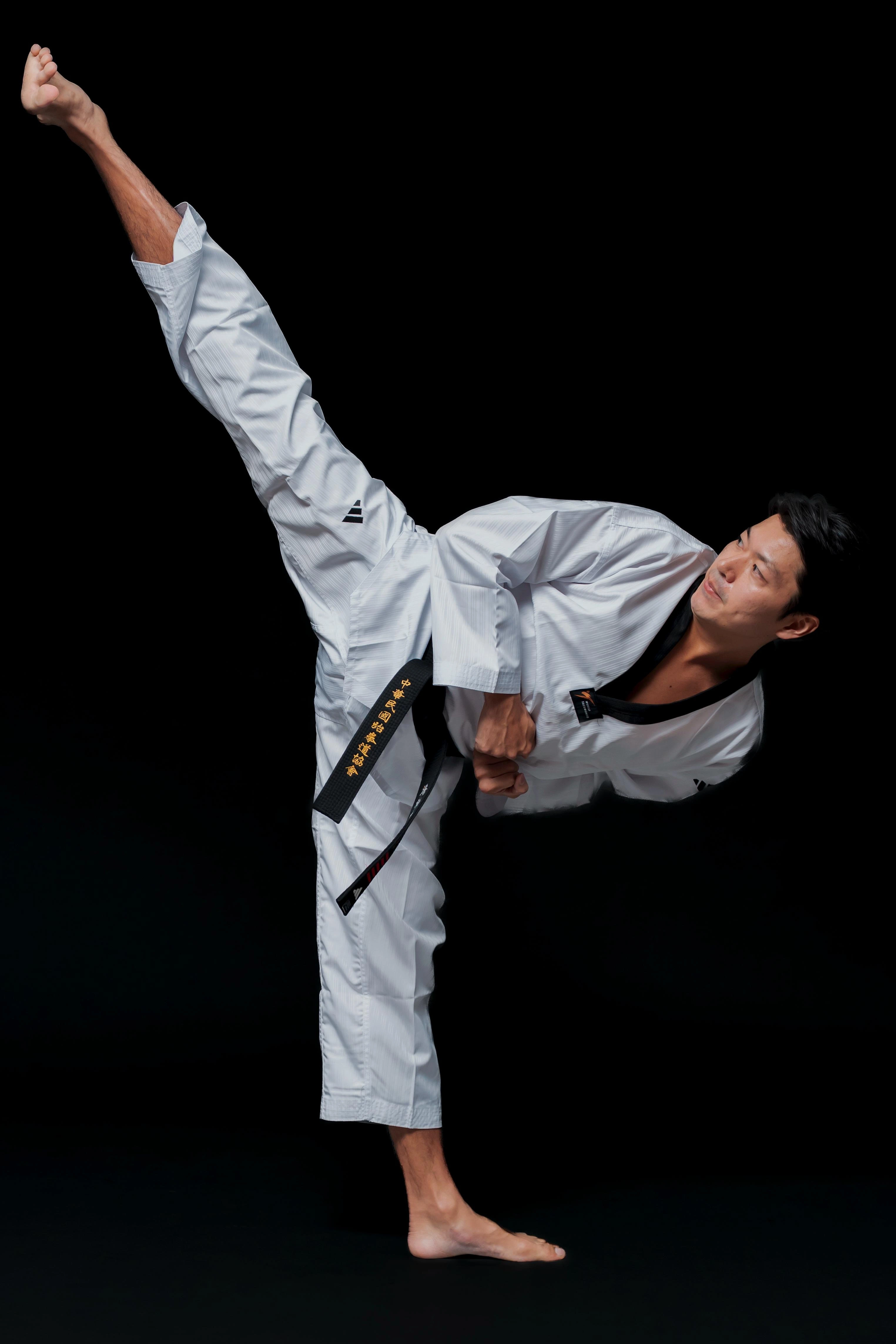
Senior Instructor & Kyorugi Competition Instructor
Kukkiwon 5th Dan, leading our sparring classes and guiding students who want to compete.

Poomsae Competition Instructor & SEA Games Gold Medallist
Former National Taekwondo Athlete, specialising in poomsae technique and helping students refine how they perform.
Neither is better in absolute terms. Taekwondo suits energetic children who like to move, since it is kicking-dominant, athletic and mobile. Karate suits children who prefer precision, repetition and grounded stances. Both teach discipline, respect and self-defence, and both use a coloured belt system. The deciding factors are usually your child's temperament and the quality of the specific school.
Taekwondo schools commonly accept children from age 3 or 4, and we take children from 3. Karate schools more often start at 4 or 5. For very young children, the structure of the class — short activities, lots of movement, clear routines — matters far more than the art itself.
Safety depends more on the school than the art. In any well-run children's class, beginners do not spar at full contact, protective equipment is mandatory for contact work, and children are grouped by age and size. Visit the class and watch how contact is introduced before you judge an art on safety.
Taekwondo has been a full Olympic medal sport since the Sydney 2000 Games. Karate featured at Tokyo 2020 but was not included at Paris 2024 or on the Los Angeles 2028 programme. This only matters if your child may eventually want a national or international competition pathway.
Taekwondo. The constant movement, kicking drills and footwork give energetic children a structured outlet, and it starts younger than karate — from age 3 with us.
It is possible, but we would not recommend it in the first year. Learning one art properly builds the discipline and body control that make a second one easier later.
Not meaningfully. The setting — community course, private academy or 1:1 — affects the price far more than the art does. Our kids classes start from $37.80 a lesson, and the full list is on our class fees page.
You do not, at the start. What you can do is book a free trial, watch their reaction, commit to three months, and expect a dip in enthusiasm around week four when the novelty fades. Children who get through that dip usually keep going, especially once their first grading is in sight.
Neither has an edge that the research can actually support, and claims otherwise are worth treating sceptically. What helps is structure, short repeated drills and an instructor who gives clear, immediate feedback — both arts are built that way. The practical differences are mundane but real: taekwondo classes tend to involve more continuous movement, which suits a child who struggles to stand still, while karate's lower stances mean more holding of positions. Visit both and watch how the instructor handles the child who is not paying attention. Our page on taekwondo for children with ADHD or autism goes into what a class demands.
A free 30-minute trial class answers this better than any article can. Come and watch a kids taekwondo class, meet the instructors, and see how your child responds. No obligation, and no charge.
Still not finding it? Ask us directly — we usually reply within the hour.